

Finding the family members of the founding fathers of the United States is easy with BillionGraves’ Cemetery Intelligence™. As the United States approaches its 250th anniversary in 2026, millions of Americans are looking for ways to connect with the people who shaped the nation’s founding and with their own ancestors.
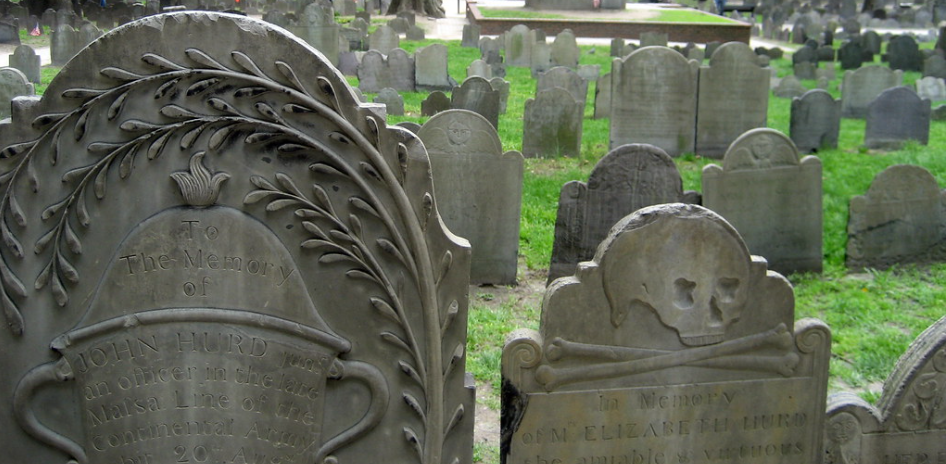
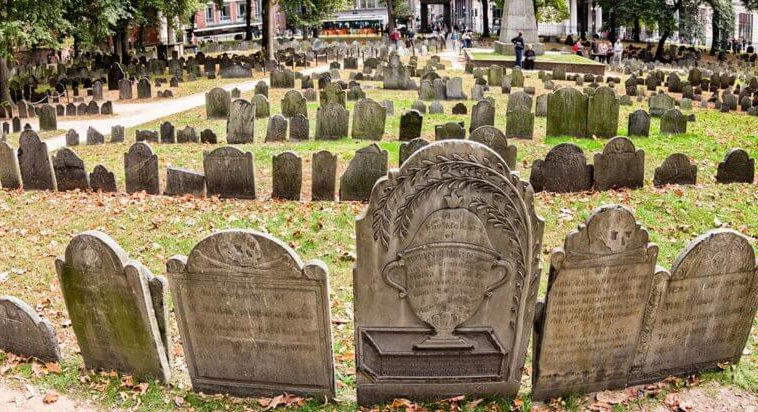
Few places offer a more direct connection to Revolutionary history than Boston’s Granary Burying Ground. Established in 1660, Granary Burying Ground is the third-oldest cemetery in Boston, Massachusetts, and one of the most significant historic burial grounds in the United States. Located along Boston’s Freedom Trail, the cemetery contains the graves of many of the men and women who influenced the American Revolution.
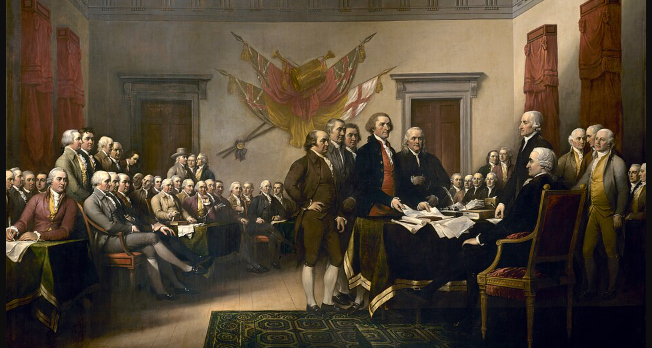
Among its most notable burials are four Founding Fathers and patriots whose actions helped create a new nation: Samuel Adams, John Hancock, Paul Revere, and Robert Treat Paine. More than a historic destination, Granary Burying Ground serves as a reminder that cemeteries preserve the stories of individuals, families, and communities.
Today, tools like BillionGraves’ Cemetery Intelligence™ help researchers uncover those stories and discover connections that might otherwise remain hidden. In this blog post, we’ll explore the history and burial sites of these 4 patriots and then discover how Cemetery Intelligence™ can help you find the final resting places of your own ancestors.
Samuel Adams (1722–1803): The Voice of Resistance
Few individuals did more to encourage resistance to British rule than Samuel Adams. A master organizer and political strategist, Adams helped establish the Sons of Liberty and played a central role in opposing the Stamp Act and other British policies.
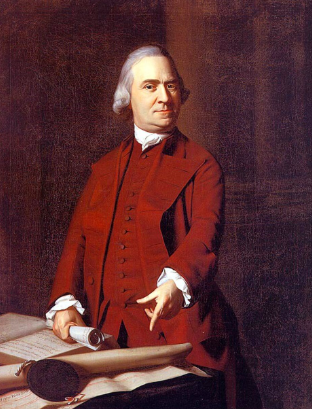
His leadership before and during the Revolution helped unite colonists behind the cause of independence. Adams later signed the Declaration of Independence and served as governor of Massachusetts.

Samuel Adams is buried in the Adams family tomb. His wife, Elizabeth Checkley Adams, and other members of the Adams family are also interred there. The tomb served as a family burial place, making it a good example of how a single grave location can connect researchers to an extended family network.
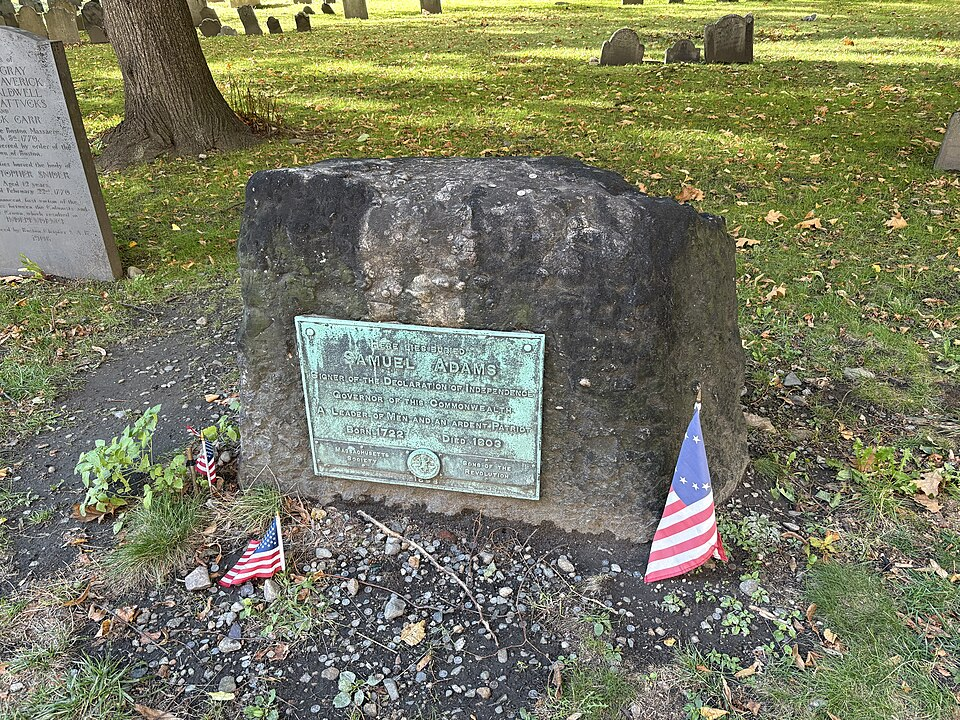
Today, visitors to Granary Burying Ground can stand before his grave and reflect on the influence of a man whose political activism helped ignite a revolution.
John Hancock: The Signature That Became a Symbol
Perhaps no signature in American history is more recognizable than that of John Hancock. As president of the Second Continental Congress, Hancock was the first delegate to sign the Declaration of Independence.
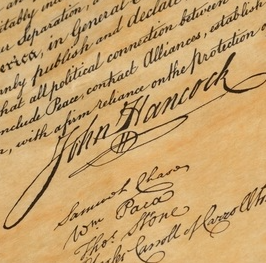
His large, bold signature became so famous that Americans still use the phrase “put your John Hancock on it” when referring to signing a document.
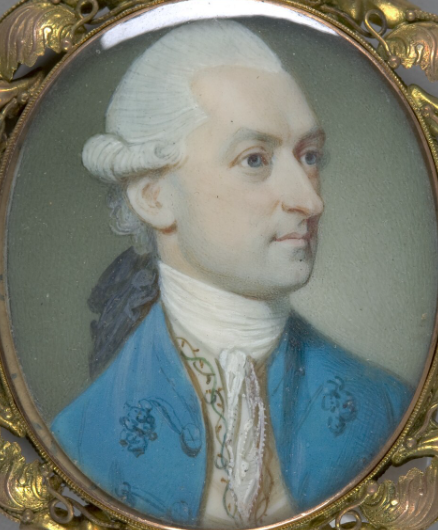
Beyond his signature, Hancock was a wealthy merchant, a supporter of revolutionary activities, and a key political leader in Massachusetts.
John Hancock is buried in the Hancock family vault. His wife, Dorothy Quincy Hancock, is buried with him, and other Hancock family members are associated with the tomb. Researchers exploring the Hancock burial site can quickly move from one prominent Revolutionary figure to his immediate family.
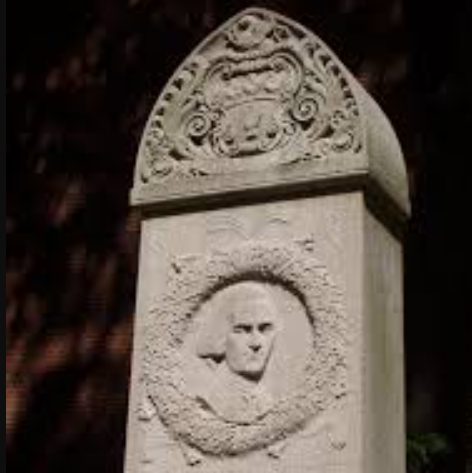
His grave remains one of the most visited sites within Granary Burying Ground, attracting visitors from around the world who seek a tangible connection to the birth of the nation.
Robert Treat Paine (1731-1814): The Forgotten Signer
While Samuel Adams, John Hancock, and Paul Revere are household names, Robert Treat Paine is less widely remembered despite his significant contributions. Paine served as a delegate to the Continental Congress and signed the Declaration of Independence. Before the Revolution, he gained prominence as a prosecutor in the trials following the Boston Massacre.
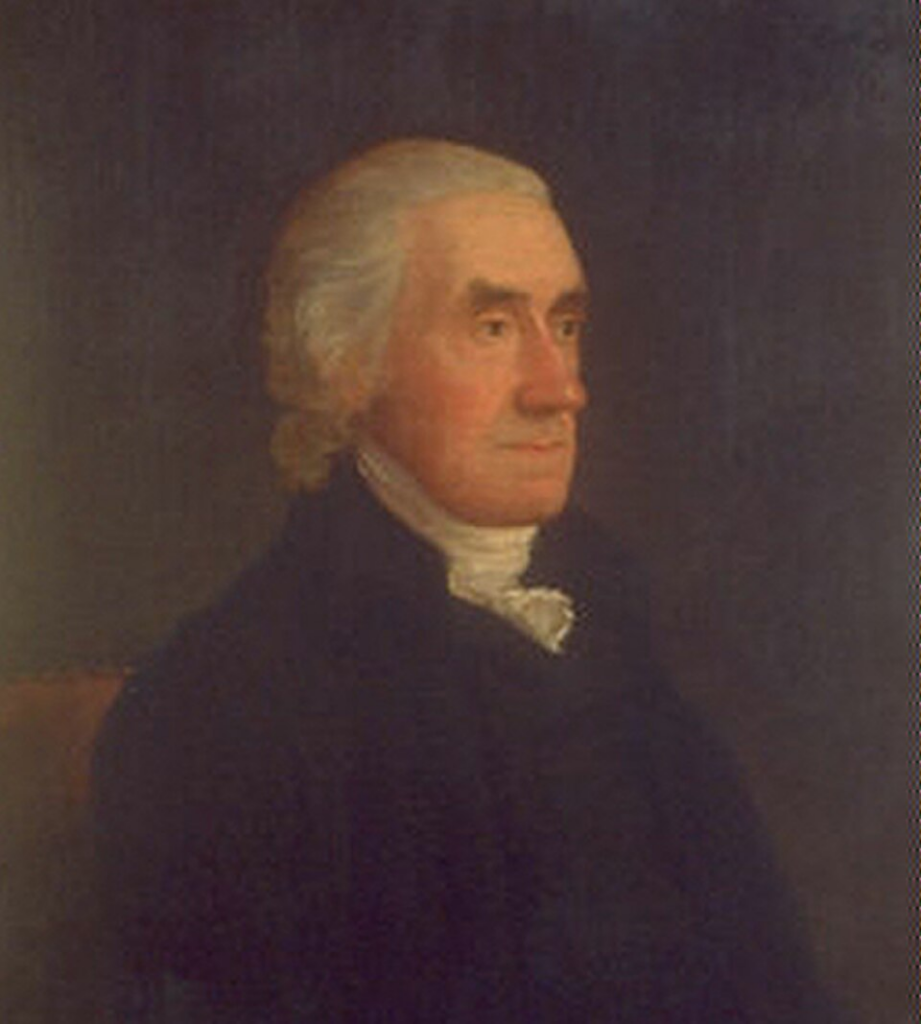
Throughout his career, Paine advocated for independence and later served in several important government positions in Massachusetts.

His grave offers visitors an opportunity to learn about one of the lesser-known figures whose efforts helped secure American freedom.
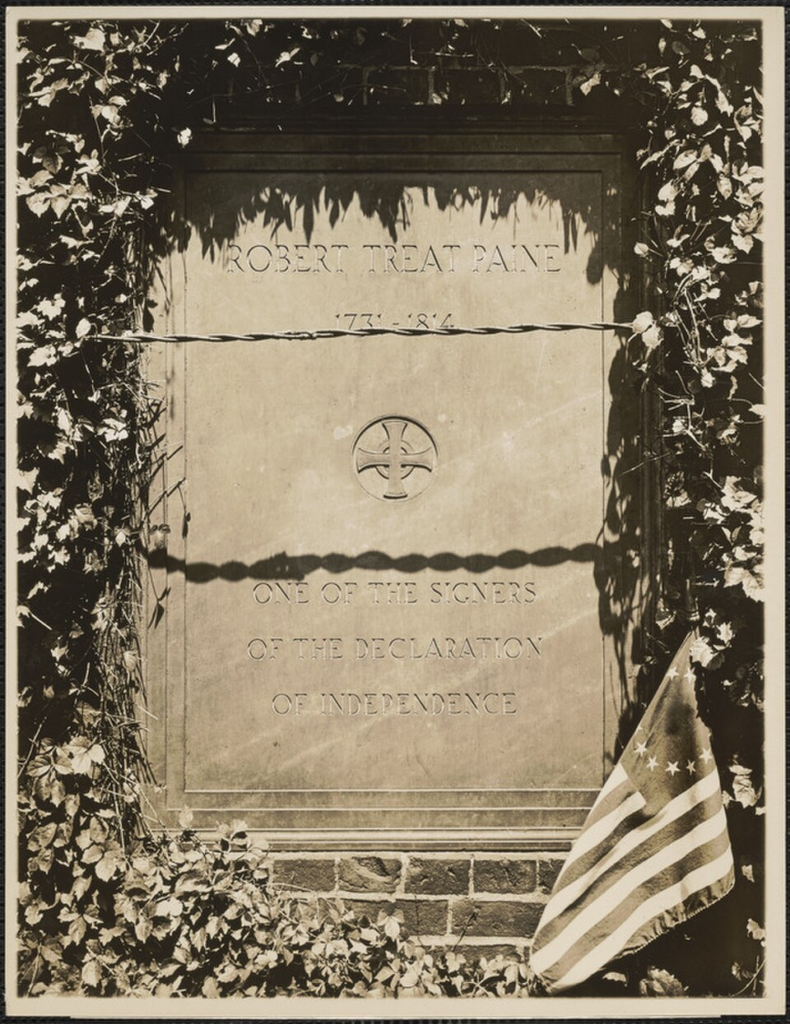
Robert Treat Paine is buried in a family tomb that also contains relatives. His descendants included notable figures such as poet and abolitionist Thomas Russell Lowell through later family lines.
Paul Revere (1735-1818): The Midnight Rider
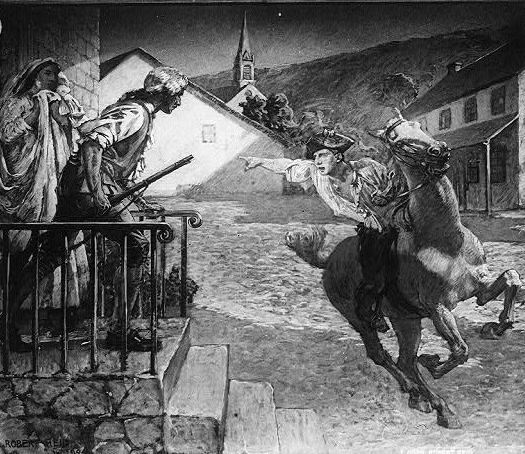
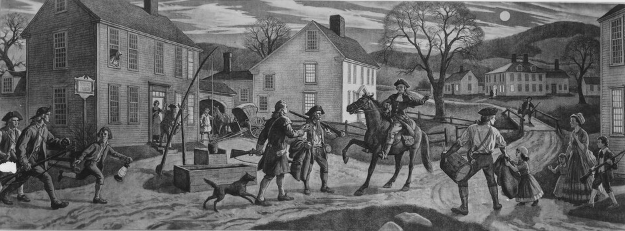
Paul Revere is remembered primarily for his famous midnight ride in April 1775. Although the popular story often simplifies the event, Revere’s mission was critical. He helped warn colonial leaders that British troops were advancing toward Lexington and Concord, enabling Patriot forces to prepare for the coming conflict.
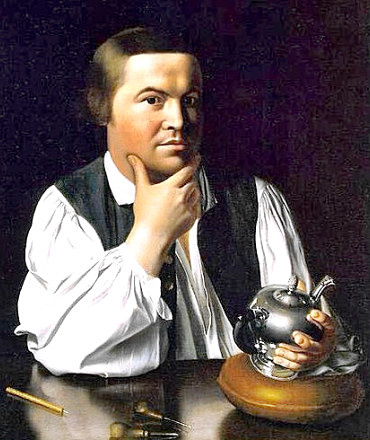
Revere was also a silversmith, engraver, businessman, and active participant in revolutionary activities throughout Boston. His burial at Granary Burying Ground allows visitors to encounter the resting place of one of the Revolution’s most enduring symbols.
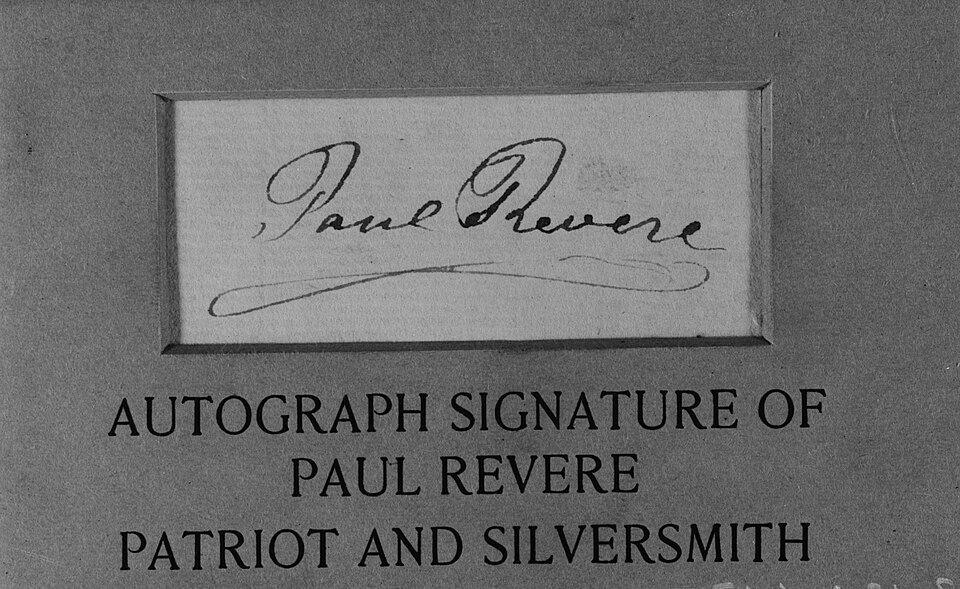
Paul Revere’s grave is across the cemetery from his two wives: Sarah Orne Revere and Rachel Walker Revere,, along with several descendants and other family members. The Revere family provides a rich example of how cemetery records can reveal multiple generations connected through one burial location.
Discovering Connections Through Cemeteries
Granary Burying Ground contains far more than the graves of famous patriots. Hundreds of early Bostonians rest within its grounds, including merchants, craftsmen, ministers, soldiers, wives, children, and extended family members. This is where modern genealogy and cemetery research become especially valuable.
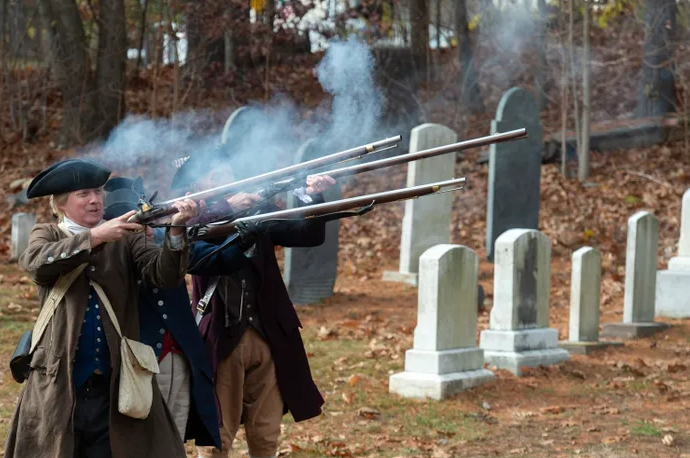
With BillionGraves’ Cemetery Intelligence™, researchers can move beyond a single gravestone to discover relatives buried nearby, identify family groups, and uncover relationships within a cemetery. A search for Samuel Adams, John Hancock, Paul Revere, Robert Treat Paine, or other founding fathers can lead to discoveries about spouses, descendants, associates, and others who shared their communities.
Cemeteries are not simply collections of individual graves. They are networks of human relationships preserved across generations.
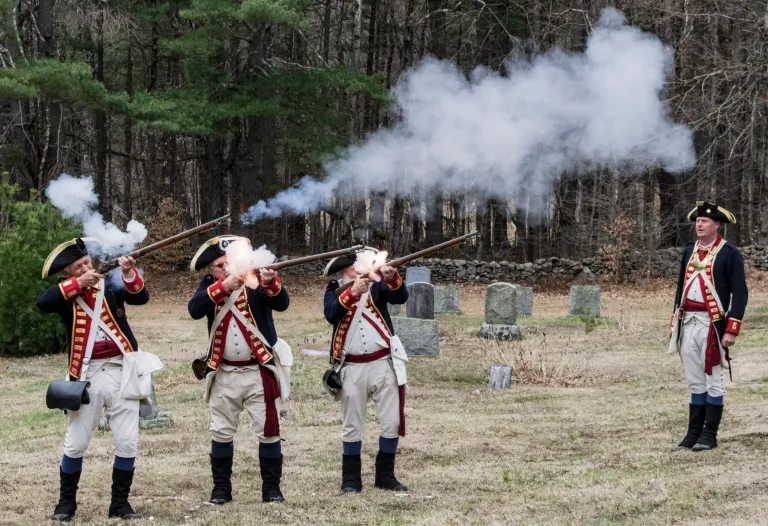
One of the fascinating aspects of Granary Burying Ground is that many of its famous Revolutionary-era burials are located among relatives, although the degree of proximity varies because the cemetery is densely packed and some family tombs contain multiple generations. Cemetery Intelligence™ can make it easy to find family members.
Why This Matters for Family History
Granary Burying Ground illustrates why cemetery research is so valuable. A visitor may arrive looking for Samuel Adams or Paul Revere, but by examining nearby graves and family tombs, they often discover spouses, children, siblings, in-laws, and other relatives. With BillionGraves’ Cemetery Intelligence™ this can even be done from your home computer.
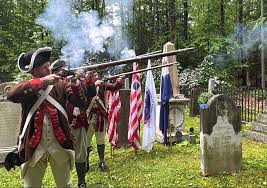
This is exactly the type of discovery that BillionGraves’ Cemetery Intelligence™ can facilitate. Rather than treating each gravestone as an isolated record, it helps researchers uncover the family and community networks that surround an individual burial. In a historic cemetery such as Granary Burying Ground, those networks can connect not only family members but also fellow patriots, neighbors, church members, and others who shared the world of Revolutionary Boston.
The Revere Family Plot
Paul Revere’s grave is one of the most genealogically rich sites in Boston’s historic Granary Burying Ground because it represents not just a famous Revolutionary patriot, but an extended family that spanned multiple generations.
Members of Paul Revere’s immediate and extended family are buried at Granary Burying Ground, including:
- Sarah Orne Revere (1736–1773), his first wife and the mother of eight of his children
- Rachel Walker Revere (1745–1813), his second wife, with whom he had eight more children
- Several of his children and descendants who remained connected to Boston throughout the late eighteenth and nineteenth centuries
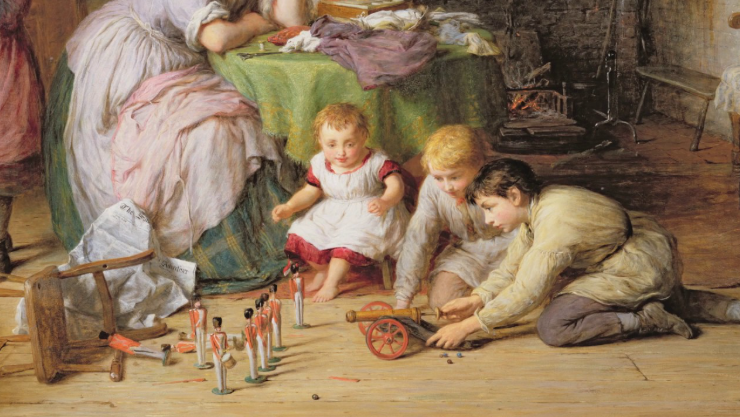
Paul Revere fathered 16 children, making the Revere family an excellent example of how one individual can connect researchers to a large network of relatives.
Cemetery Intelligence™ Discoveries for Paul Revere
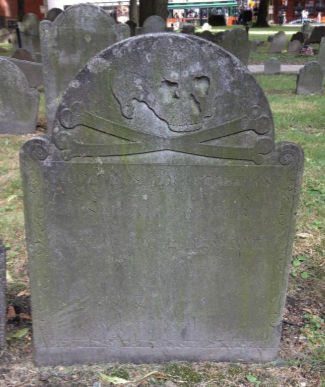
The gravestone itself provides basic information, but Cemetery Intelligence™ can help reveal much more:
- Identify nearby family burials
- Discover additional spouses
- Locate children and descendants buried in the same cemetery or nearby cemeteries
- Connect spouses, parents, children, and siblings through burial records
- Build family groups
- Visualize relationships that may not be obvious from a single gravestone
- Trace multiple generations
- Follow descendants of Paul Revere into the nineteenth century
- Discover how later generations spread throughout New England and beyond
- Find community connections
- Explore burials of neighbors, business associates, fellow church members, and Revolutionary-era contemporaries
- Uncover social networks that surrounded the Revere family
Finding the Family of Paul Revere with Cemetery Intelligence™
Let’s begin with a search for one of the most famous founding fathers, Paul Revere.
In this example, we’ll begin by opening BillionGraves.com and searching for the name of Paul Revere.
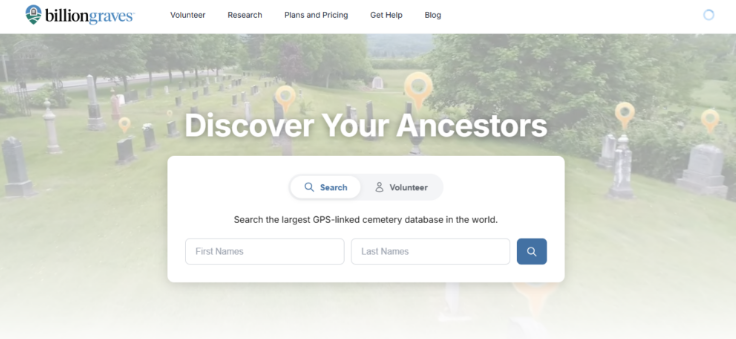
1) Log in (and Upgrade, if needed)
The first step is to log in to your account. Basic research on BillionGraves is free, but you will be able to see a LOT more information if you have an upgraded subscription with Cemetery Intelligence™, including high-resolution images.
If you don’t have access to Cemetery Intelligence™ yet, here’s a great deal for you! In remembrance of America’s 250th, BillionGraves is offering upgraded subscriptions at just $2.50 per month for first-time subscribers. Check it out here: https://billiongraves.com/bgplus-buy-now
2) Enter Names, Dates, and Places
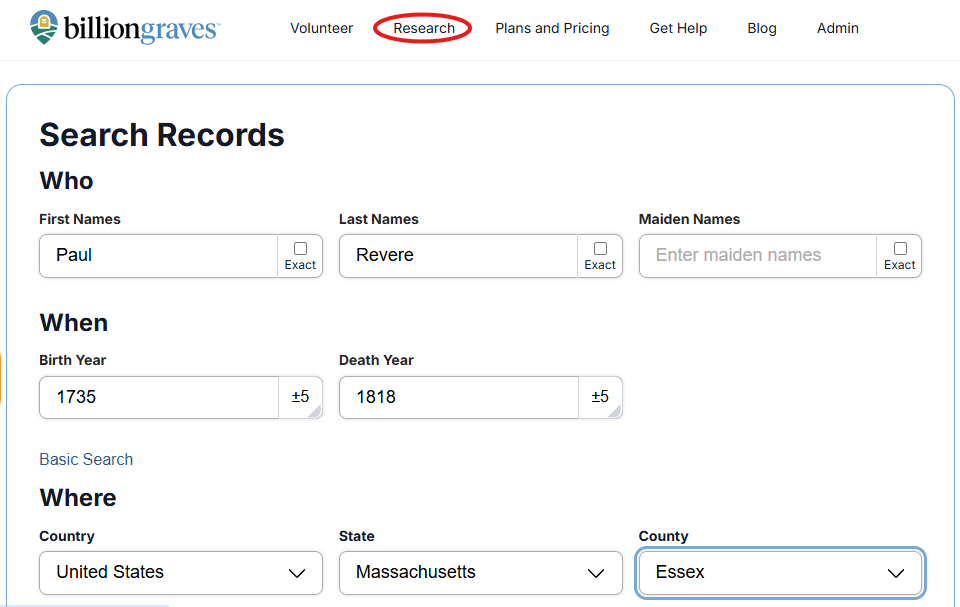
Enter the names, dates, and places, as much as is known. In this case, we have entered “Paul Revere, 1735-1818, Essex County, Massachusetts.
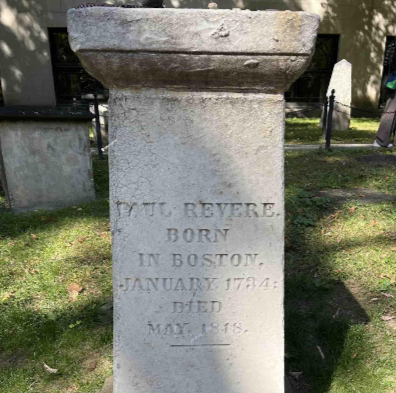
Several high-resolution images of Paul Revere’s headstone appear. There are other images from his life, too.
Cemetery Map for Founding Father Paul Revere
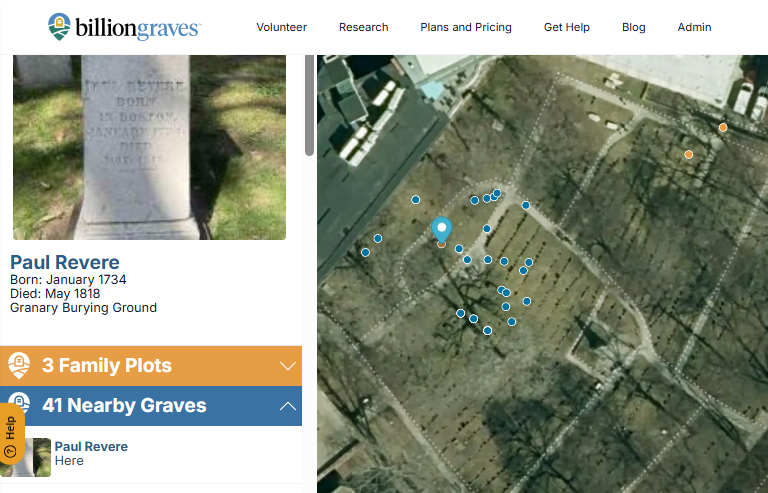
Results also show this map of Granary Burying Ground with the GPS-marked location of Paul Revere’s final resting place, as well as other family plots and nearby graves. You can click on each dot to reveal who is buried there or scroll down the list to see their names.
3) Analyze the Headstone with Cemetery Intelligence™
The Cemetery Intelligence™ sidebar has options for exploring more information. First, select the button labeled “Analyze Headstone”.
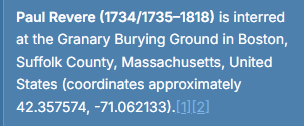
The analysis gives details about the headstone, including the exact location.
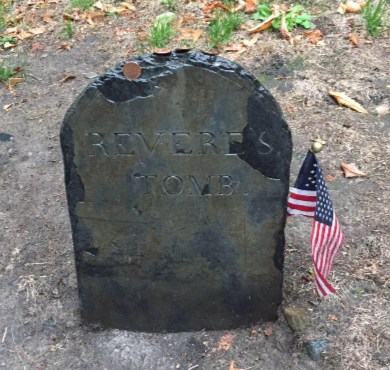
It also notes that the obelisk-style gravestone rests next to an older slate marker.
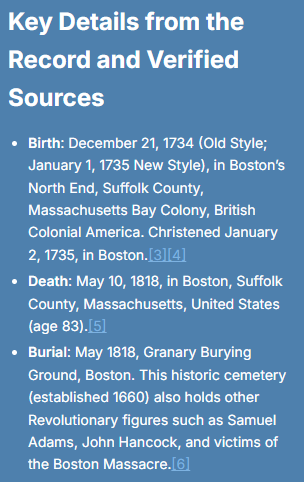
The analysis includes information from other verified sources. Notice the numbers at the end of each paragraph. If you were on the actual record page for Paul Revere, you would be able to select those numbers to see the sources of information.
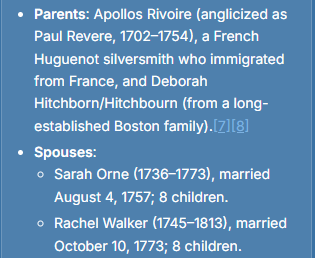
The analysis also includes information about Paul Revere’s parents and both of his spouses.
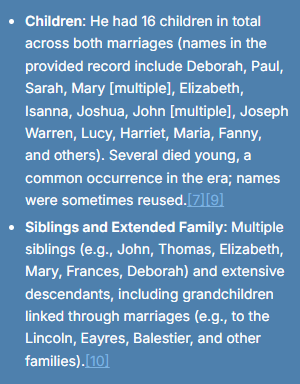
Then it lists his children, siblings, and extended family. Again, each paragraph ends with clickable numbers that lead to the sources of information.
4) Get Additional Historical Context from Cemetery Intelligence™
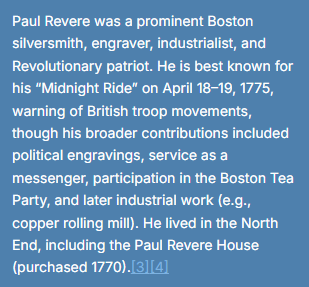
Next, the analysis gives additional historical context, such as occupation, military service, and notable accomplishments.
5) Sources from Cemetery Intelligence™
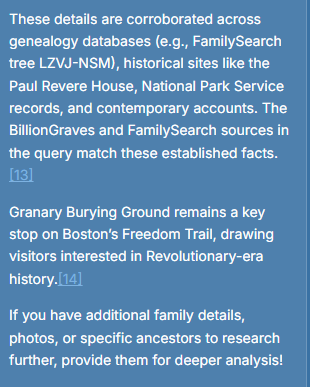
Finally, the analysis lists sources of information and gives suggestions for further research. It also invites you to submit additional family details.
6) Find Nearby Family with Cemetery Intelligence™
This next section is where Cemetery Intelligence™ really shines!
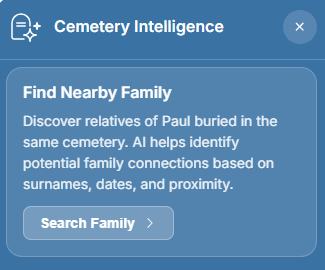
From the records page (in this case, Paul Revere’s record page), select the button in the sidebar that is labeled “Search Family”.
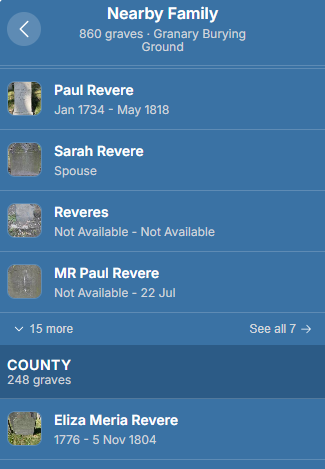
This “Nearby Family” feature reveals other family members within the same cemetery. It even shows a separate list for potential family members buried in other cemeteries within the same county.
7) Life Story from Cemetery Intelligence™
Next, Cemetery Intelligence™ will provide a Life Story for Paul Revere.

In the Cemetery Intelligence™ sidebar, select the button labeled “Generate Story”. This brings up a 9-paragraph biographical sketch of Paul Revere’s life. Here is the beginning of it:
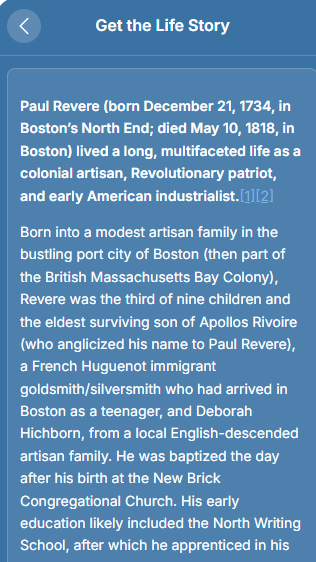
Paul Revere is quite famous in American history, so I wasn’t expecting to learn anything new about him in this life story, but I was surprised. Did you know that Paul was a 2nd lieutenant in the French and Indian War?
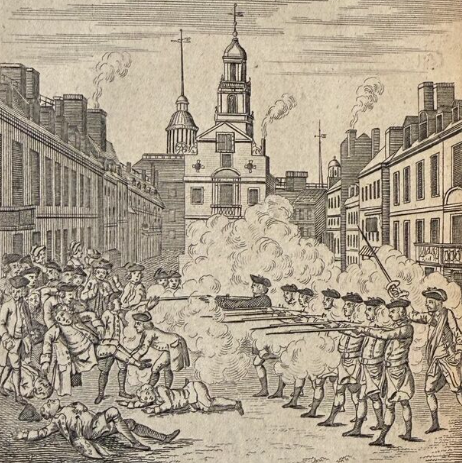
And did you know that while he worked in his family’s silversmith business, producing a wide range of items from everyday spoons to elegant tea sets for wealthy clients, he also supplemented his income by engraving political cartoons, like this one:
Cemetery Intelligence™ also revealed that Paul Revere had a side gig cleaning teeth and fitting false teeth.
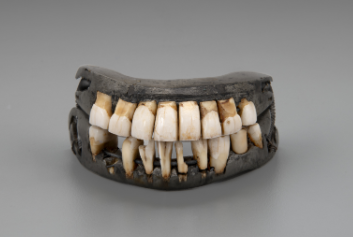
By the way, contrary to the popular myth, Revolutionary War-era false teeth were never made of wood. Instead, they were made from human teeth, hippopotamus ivory, and animal bone, held together with wire and metal springs. Since these early prosthetics stained easily, the teeth had a woody appearance, leading to the enduring “wooden teeth” legend.
8) Next Steps from Cemetery Intelligence™

Finally, Cemetery Intelligence™ will guide your next steps by helping you find additional sources of information.
9) Memories from Cemetery Intelligence™
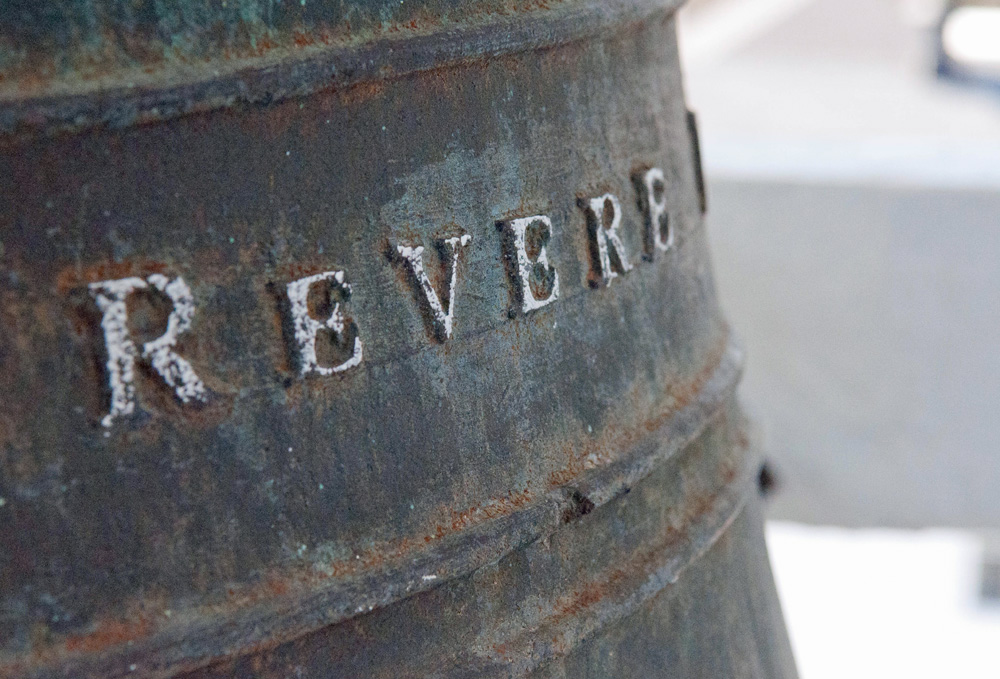
Cemetery Intelligence™ also gathers memories and stories about your ancestors and tags them with the sources of information. Here’s one that was posted about Paul Revere by Gilbert Stuart with the New England Historical Society:
Ring Them Revere Bells
“It was only by accident that Paul Revere, at 57 years old, got into the business of casting bells. He’d had some experience with bells. As a teenager, he signed a contract with Christ Church – Boston’s Old North Church — to serve as a bell ringer. And like everyone else in Boston, he understood the importance of bells: they rang to wake people, to summon them to church services, to tell the cook when it was time to start dinner, to mark the passing of a human life.
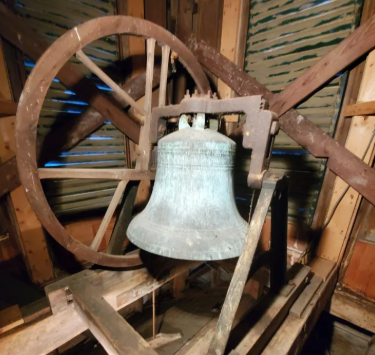
“Revere in 1792 was a member of the New Brick Church, which had a problem: Its bell cracked. He offered to recast it, though he knew nothing about molding and casting bells. He consulted with Aaron Hobart, one of the few people in America who did know about bells. Hobart probably told him how bells with pleasant, musical tones are notoriously hard to forge: The shape affects the tone, as does the combination of copper, tin, silver, zinc, and lead. Copper from different mines will create different sounds.
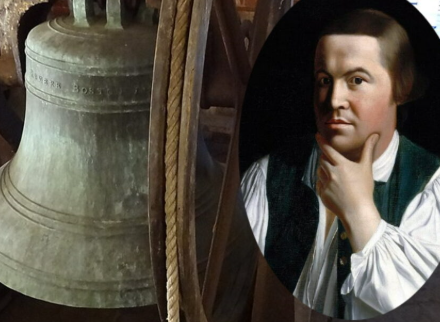
“Revere’s first bell for the New Brick Church, a 912 pounder, was not terribly successful. It was said to have a harsh tone. But Revere and his sons Paul Jr. and Joseph Warren went ahead, casting 398 bells between 1792 and 1828, first at their North End foundry and after 1804 in Canton, Mass. The bells often bore the inscription: The living to the church I call, and to the graves I summon all.”
Finding Paul Revere’s Family
Traditional cemetery research often focuses on one grave at a time. But Cemetery Intelligence™ helps researchers think in terms of family networks.
A visitor who starts with Paul Revere’s grave might quickly uncover:
- Two wives
- Numerous children
- Multiple generations of descendants
- Connections to other prominent Boston families
- Relationships to fellow patriots buried nearby, including Samuel Adams and John Hancock
The result is a much richer understanding of both family history and American history.
Perfect for America’s 250th Anniversary
As the United States commemorates its 250th anniversary, the Revere family plot demonstrates how historic cemeteries preserve far more than famous names. They preserve families.
Paul Revere may be remembered for his midnight ride, but his gravestone is also a gateway to a much larger story, one that spans generations and illustrates how Cemetery Intelligence™ can help modern researchers move from a single burial to an entire family tree.
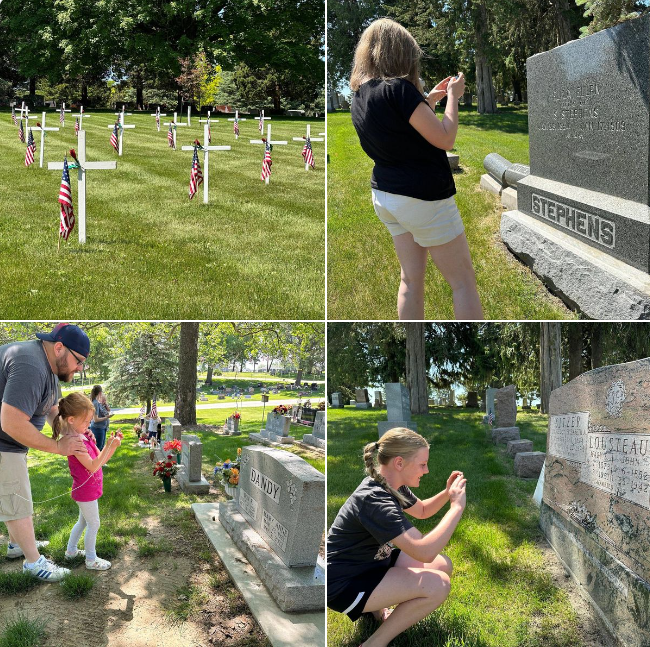
For genealogists, that’s where some of the most exciting discoveries begin: not with a famous ancestor, but with the relatives resting beside them.
Ready to Try It for Your Own Family?
Historic family plots such as Samuel Adams’, John Hancock’s, Robert Treat Paine’s, or Paul Revere’s in Boston’s Granary Burying Ground demonstrate how much can be learned from cemetery records. The results may be even more amazing for your own family tree!

Every family tree has missing branches, and sometimes the clues you need are hiding in plain sight. With BillionGraves’ Cemetery Intelligence™, you can go beyond a single gravestone to discover relatives buried nearby, uncover family connections, and identify multiple generations resting within the same cemetery. What begins with one ancestor can quickly lead to parents, spouses, children, siblings, and extended family members you never knew existed.
Learn More
Check out these BillionGraves blog posts to learn more:
- American Revolution Gravestone Symbols
- 20 Gravestone Angels from Colonial America
- Winged Skull Gravestone Symbols
- Why Every Grave has a GPS Location on BillionGraves (Thomas Jefferson)
Happy cemetery hopping, happy researching, and happy birthday, America!
Cathy Wallace