
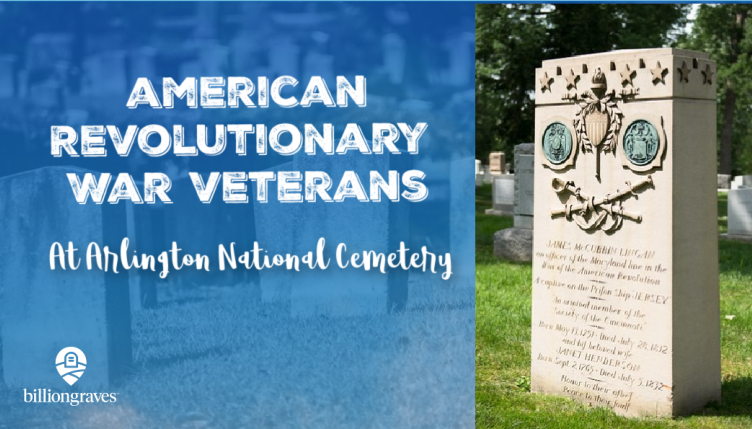

As America celebrates its 250th birthday, BillionGraves honors and remembers the American Revolutionary War Veterans buried at Arlington National Cemetery.
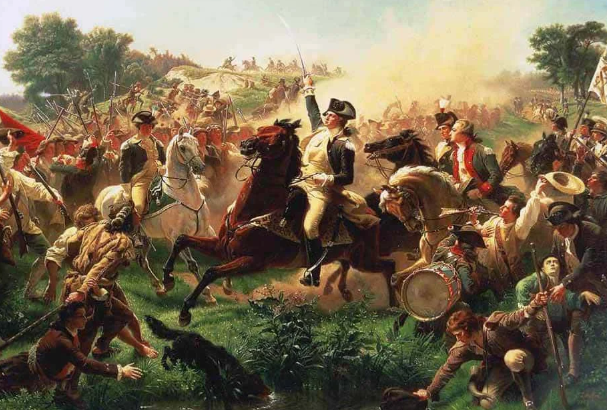
During the American Revolution, at the end of each battle, the victorious army usually buried the dead from both armies. It was often done in haste, sometimes in the dark of the night.
Many of the remains of these veterans were scattered, lost, unidentified, or buried without markers. Only the officers were recognized with ceremonies or special treatment. Some soldiers’ bodies were taken to their homes, but most were simply buried close to where they fell in unmarked graves.
Keep in mind that there was no national cemetery at that time, for the obvious reason that the United States of America wasn’t a nation yet.
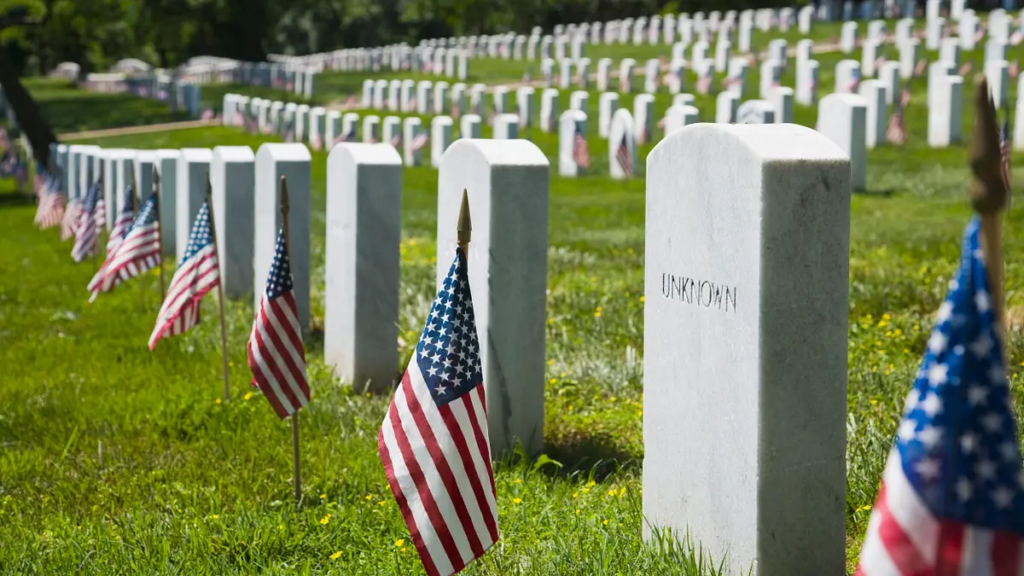
Today, some of the remains of American War veterans have been reinterred. Arlington National Cemetery became the final resting place for 11 veterans of the American Revolutionary War. Their markers serve as a reminder of the price these men paid for freedom.
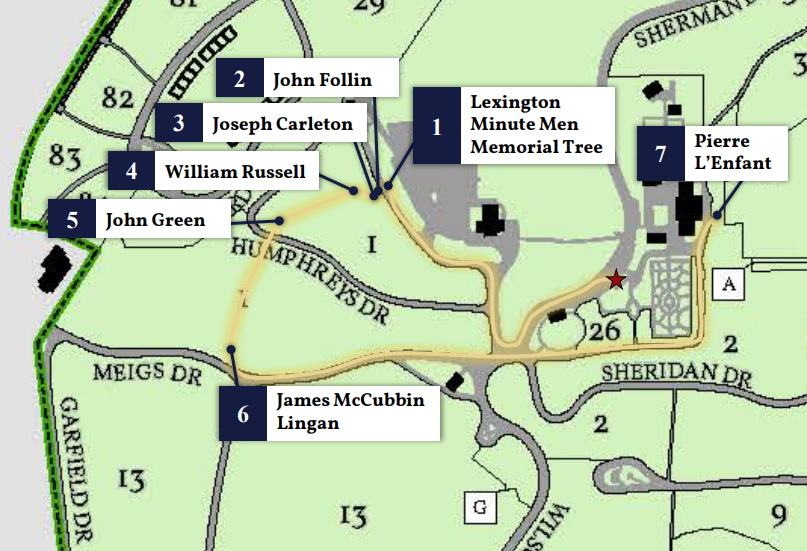
1 ) American Revolutionary War Veterans: Hugh Auld
Hugh Auld (1745 – 1813) was the youngest of six sons of John Auld and Mary Sherwood. All six sons served in the Revolutionary War.
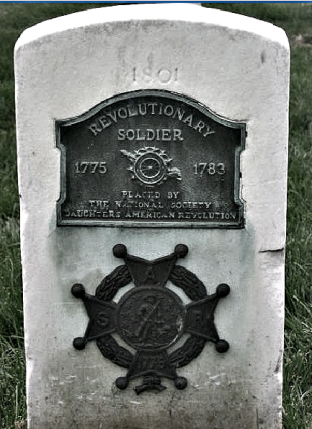
Auld was a lieutenant in Maryland’s Talbot County militia.
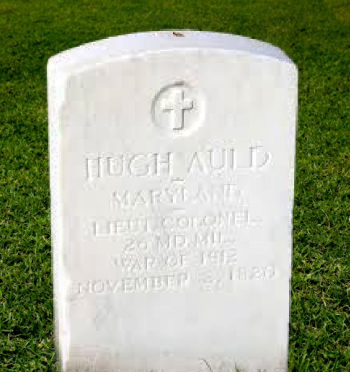
Auld was originally buried in the Deepwater Point Cemetery, Talbot County, Maryland. He is now buried at Arlington National Cemetery next to his son, Hugh Auld, Jr., a soldier who served in the War of 1812.
2) American Revolutionary War Veterans: William Ward Burrows
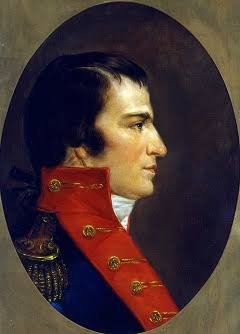
Not much is known about William Ward Burrows (1758–1805). He may have served in a South Carolina militia, helping to gather vital information behind enemy lines (i.e., a secret spy!).
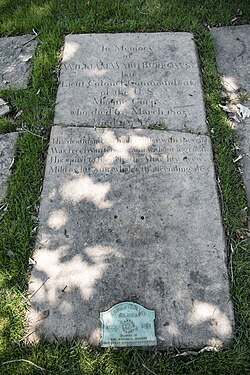
3) American Revolutionary War Veterans: Joseph Carleton
Although Joseph Carleton (1754–1812) was born in England and immigrated to the American colonies sometime before the start of the American Revolution.
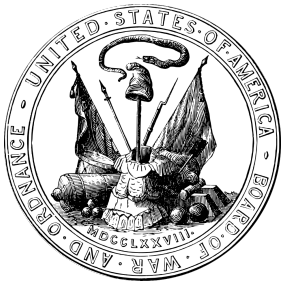
Although Carleton did not fight in combat, his work was essential. He kept the Continental Army stocked with supplies, organized, and functioning. Carleton was only 24 when he was appointed to the Board of War and Ordnance. Despite his young age, Carleton carried out his enormous responsibilities with exactness.
In 1784, Carleton reported to Congress that of the $66 million in transactions (the equivalent of about $1.5 billion today) that he managed on behalf of the American military, he could account for all but $320.
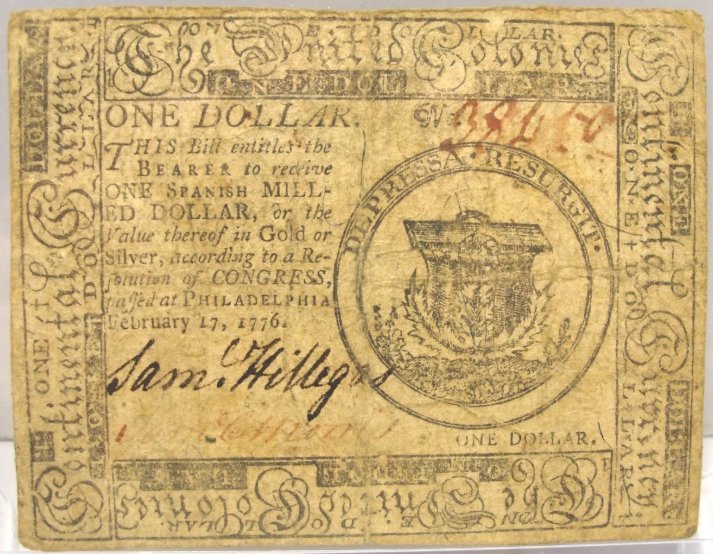
Congress recognized his outstanding work, writing: “Joseph Carleton conducted himself as an able, diligent, upright, and faithful servant of the United States.”
As the war ended, Carleton was still only 30 years old, yet he managed the difficult tasks of disbanding the army and paying off wartime debts. He also organized a peacetime military system for the new nation.
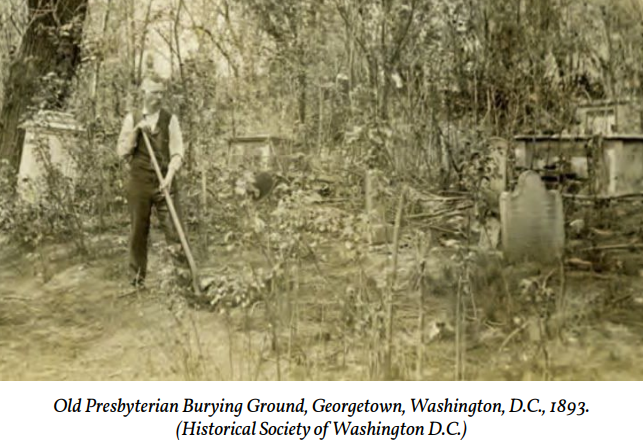
Carleton was originally buried in the Presbyterian Burying Ground in Georgetown, Washington, D.C. In 1891, cemetery trustees announced that the cemetery was closing and requested that families remove their loved ones’
remains. It is not known whether Carleton had any family members in the United States. It is possible that no one knew where he was buried.
In 1907, a maintenance worker ran over Carelton’s gravestone while developing the grounds into a playground and park.
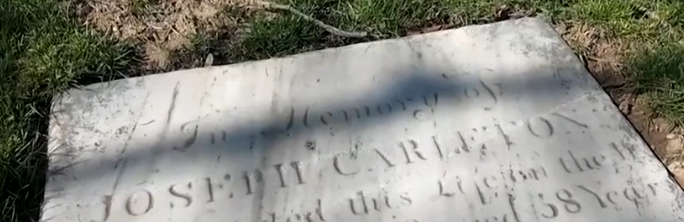
His remains were then moved to Arlington National Cemetery, where his loyalty continues to be recognized with honor.
4) American Revolutionary War Veterans: John Follin
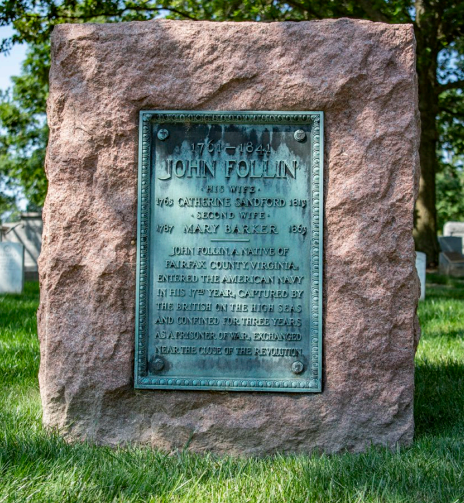
John Follin (1761–1841) was one of about ten children born to William Follin and Bathsheba Hurst Follin near Falls Church, Virginia.
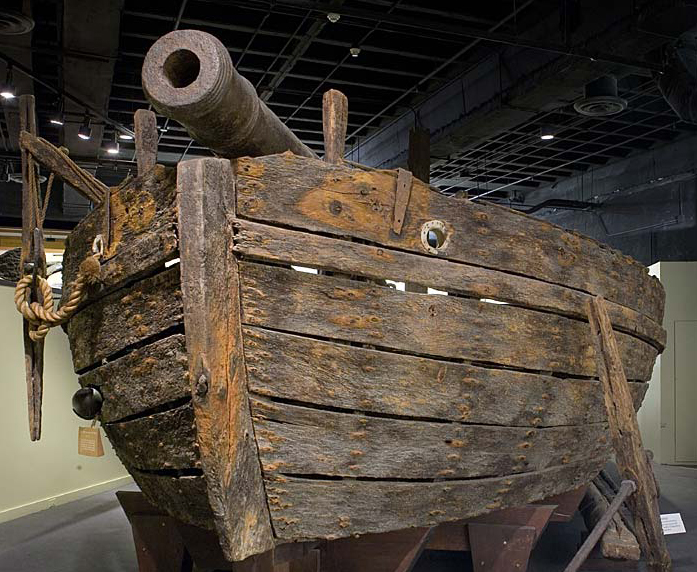
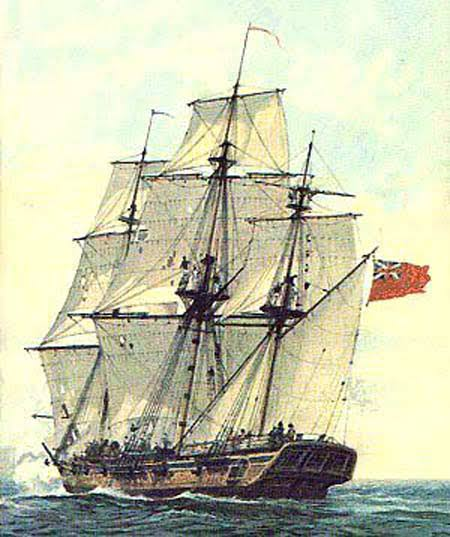
Follin enlisted at about age 17 as a Continental Navy sailor. Soon afterward, his ship was captured by the British, and he was taken as a prisoner of war. Follin was held for 3 years, enduring whippings and little food.
Near the end of the war, he was freed during a prisoner exchange. Follin landed in Philadelphia and walked home to Virginia, begging for food along the way. His son later wrote, “He said he craved milk all the time and got plenty of it.”
He later had 17 children with his first wife, Catherine Sandford, and another nine with his second wife, Mary Barker.
After the war, Follin continued to be a fierce American patriot and instilled his love for his country in his children. Five of his sons followed in his footsteps, defending the nation’s freedoms in the War of 1812.
During the War of 1812, Follin wrote to one of his sons, “You have often heard me recount my sufferings by those despots you now oppose us in our long and arduous struggle for those liberties you are now in arms to defend. Then shall my youthful efforts add to the many sufferings and hardships I then endured to obtain the independence of our happy country and convey it as the best inheritance to future generations, be wantonly or traitorously resigned unto the hands of those from whom we wrested it? No, my son, I hope you will stand firm in the Liberties of your Courage and defend them against external or internal foes.”
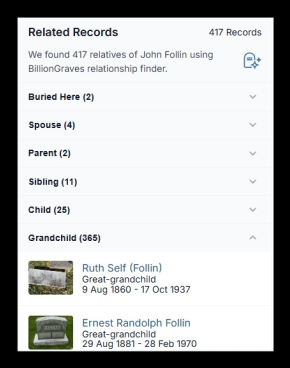
By the way, when you are researching your own ancestors, be sure to use BillionGraves Cemetery Intelligence. Check out this absolute gold mine of genealogical information that Cemetery Intelligence found for John Follin’s family! 417 relatives! 365 grandchildren/great-grandchildren!
For example, from John Follin’s record page on BillionGraves (HERE), you can see that Cemetery Intelligence has discovered that one of John Follins’s great-grandchildren is Ruth (Follin) Self. She isn’t even buried near him. He is buried in Arlington National Cemetery and she is buried in Bowling Green, Kentucky. That’s amazing!
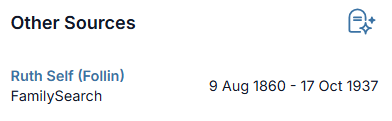
Next, click on the provided link for Ruth (Follin) Self, to navigate to FamilySearch to see how they are related and find even more family members. Have fun exploring this great new tool and then try it with your own family names.
5) American Revolutionary War Veterans: John Green
For nearly the entire war, John Green (1730–1793) led Virginia regiments in the Continental Army.
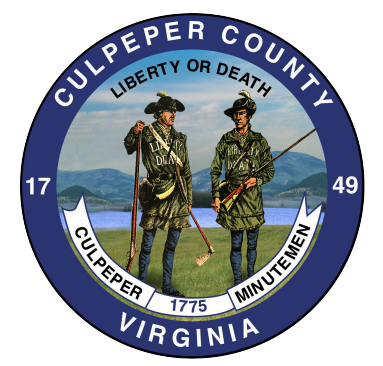
In July of 1775, when the Continental Congress instructed the colonies to prepare for war by organizing local militias, Green helped organize the Culpeper Minute Men. This militia bravely defended Virginia during the initial days of the war and is featured on the seals of both the County of Culpeper and the town of Culpeper.
In 1776, Green was shot through the shoulder during the Battle of Mamaroneck in New York, but he survived and continued to serve until the end of the war.
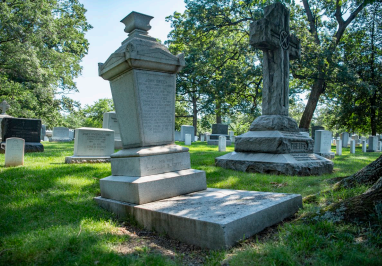
Green and his wife, Susannah, were originally buried in their family cemetery. In 1911, their remains were reinterred at Arlington by Green’s descendants, who also provided the large marker for the grave.
6) American Revolutionary War Veterans: Pierre L’Enfant
Pierre Charles L’Enfant (1754–1825) was a French-born architect, engineer, and city planner who came to America to serve in the Continental Army during the American Revolution. Arriving in the colonies in 1777, at the age of 23, he served closely with General George Washington, most notably at Valley Forge.
L’Enfant’s father was a painter. L’Enfant shared his father’s gift for art and had studied at the Royal Academy in Paris. While stationed at Valley Forge, the Marquis de Lafayette commissioned L’Enfant to paint a portrait of George Washington. L’Enfant produced several paintings and pencil sketches of Washington and other officers during the war.
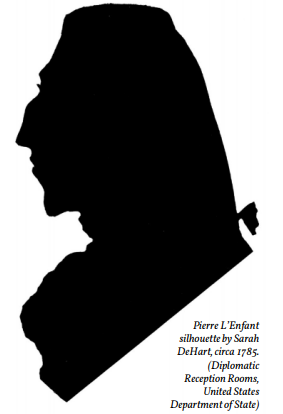
In 1779, L’Enfant was wounded at the Battle of Savannah, Georgia, and in 1780, he was captured as a prisoner of war at Charleston. L’Enfant was commissioned as a lieutenant in the Corps of Engineers. In 1783, he was promoted to Major.
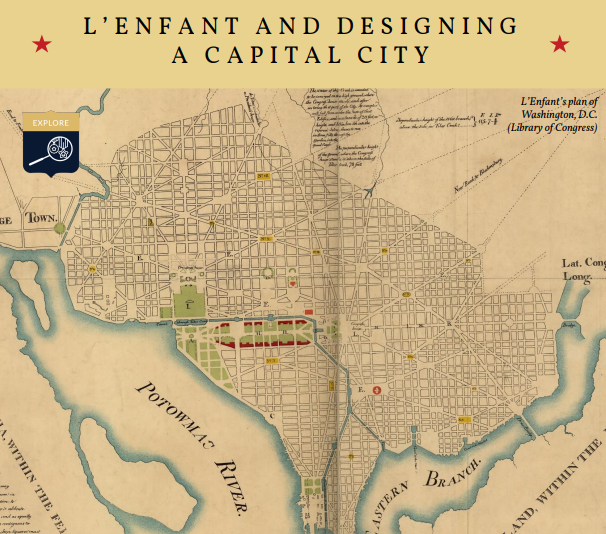
In 1791, President George Washington selected L’Enfant to design the blueprint for the new nation’s capital.
Despite his service in the war and subsequent fame as a city planner, L’Enfant died in poverty on a Maryland farm, where he was buried in an obscure grave.
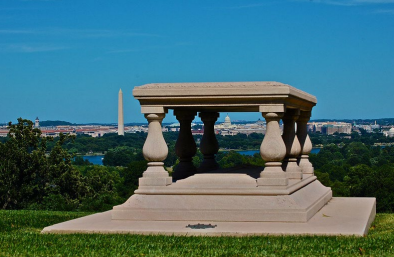
In 1908, Congress designated funds for L’Enfant’s remains to be reinterred in “a place accessible to the public and to erect thereon a suitable memorial.” The following year, in April of 1909, L’Enfant’s casket arrived in Washington, D.C., and lay in state at the U.S. Capitol. He was the first foreign national granted this honor.
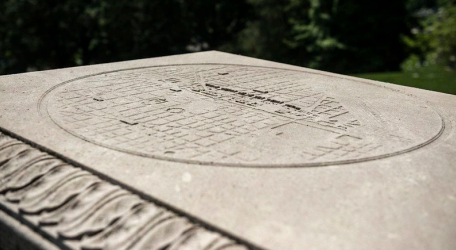
The marble monument, placed in 1911, is engraved with L’Enfant’s plan for the nation’s capital.
His casket was later escorted by military guards to Arlington National Cemetery, where L’Enfant was honored with a full military honors funeral. His final resting place is on a hillside overlooking the city that he designed.
7) American Revolutionary War Veterans: Caleb Swan
Caleb Swan (1758–1809) served in the 3rd, 8th, and 9th Massachusetts Regiments during the Revolutionary War.
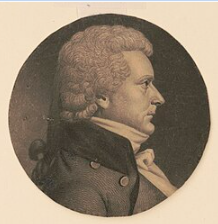
After the war, he served as the Paymaster of the Army from 1792 until 1808. As Paymaster, he was promoted to the rank of Major, and he earned $120.00 per month. He also received $10.00 per month for forage and four rations per day, for a total annual compensation of $1,764.40.
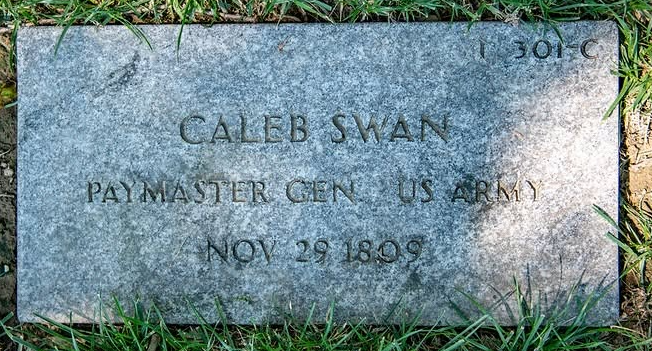
Swan resigned from the Army in 1808 and died in 1809. He was originally buried in the Old Presbyterian Cemetery in Washington, D.C. In 1892, he was reinterred at Arlington National Cemetery, where he is buried beneath a simple flat headstone.
8) American Revolutionary War Veterans: James House
James House (1761–1834) enlisted in the Continental Army in 1777, at the age of fifteen. He served as an artillery gunner in the 1st Continental Artillery during the Revolutionary War.
Later, House served in the War of 1812, eventually attaining the rank of brevet brigadier general.
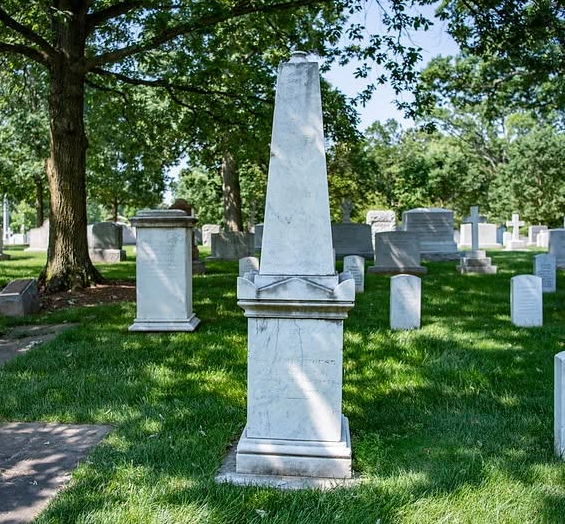
James House died in 1834 and was buried in the Old Presbyterian Cemetery in Georgetown, Washington, D.C. His remains were reinterred at Arlington in 1892.
9) American Revolutionary War Veterans: Thomas Meason
Thomas Meason (1726–1813) is the Revolutionary War veteran who holds the honor of being the oldest person, by birth year, buried at Arlington National Cemetery. He lived to the age of 87.
Mason served in Darr’s Detachment of Pennsylvania troops during the American Revolution. Even though his gravestone includes the word “general,” historians agree that he never served as a battlefield general.
After the war, Meason became a successful lawyer in Uniontown, Pennsylvania. He passed away in 1813 and was buried in the Old Presbyterian Cemetery in Georgetown, Washington, D.C. His remains were reburied at Arlington in 1892.
10) American Revolutionary War Veterans: James Lingan
James McCubbin Lingan (1751–1812) held such strong beliefs in the ideals of the Declaration of Independence and the Constitution that he fought for those principles twice in his life. First, he defended them as a young officer in the Revolutionary War, and second, he died while defending the freedom of speech.
Lingan served as a 2nd lieutenant in the Maryland and Virginia Rifle Regiment. In 1776, he was severely wounded and captured by British forces. Lingan endured three and a half years as a prisoner of war.
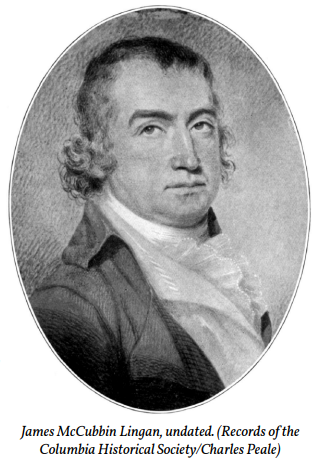
After the war, Lingan served in Congress from 1800 to 1804. He was also appointed by George Washington to collect taxes at the port of Georgetown.
On July 28, 1812, Lingan was defending a Baltimore newspaper’s right to publish editorials opposing the War of 1812 when he was killed by a violent mob.
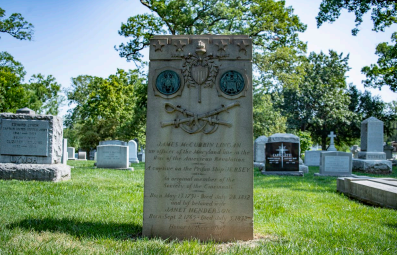
James Lingan was originally buried at a cemetery in Georgetown (Washington, D.C.). But in 1908, as the city’s growth crowded out the burial ground, his granddaughters arranged to have his remains reinterred at Arlington National Cemetery. His burial in Arlington ensures that Lingan’s service in the Revolutionary War and his defense of free press will always be remembered.
11) American Revolutionary War Veterans: William Russell
Colonel William Russell (1735–1793) led several Virginia regiments during the Revolutionary War, at the battles of Brandywine, Germantown, and Monmouth.
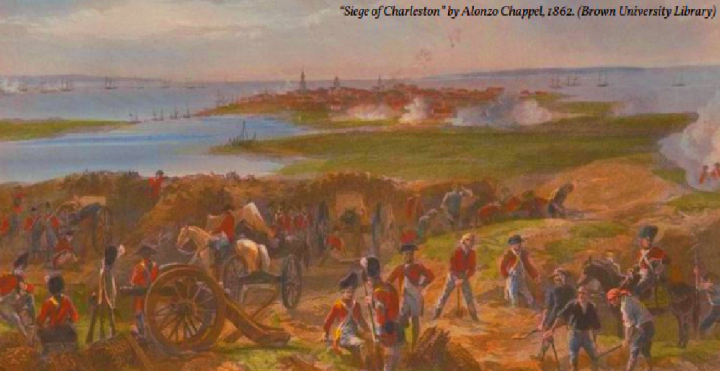
In 1780, at the Siege of Charleston, South Carolina, Russell and his garrison surrendered to the British. They were taken to the West Indies as prisoners of war. Later, after being freed during a prisoner exchange, he returned to the Continental Army and was present at the British surrender at Yorktown in 1781.
After the war, Russell served in the Virginia Senate, and Russell County, Virginia, was named in his honor. But when Russell died in 1793, he was buried in an unmarked grave in a tiny private cemetery. For over 150 years, his final resting place was forgotten.
It wasn’t until one of Russell’s descendants began searching for his gravesite in the 1930s that his remains were located. In 1943, he was reinterred at Arlington National Cemetery.
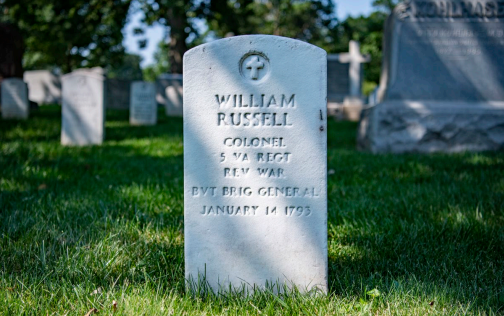
He was the last Revolutionary War veteran buried here at Arlington, and one of only two marked with a standard government headstone.
Lexington Minute Men Honored at Arlington National Cemetery
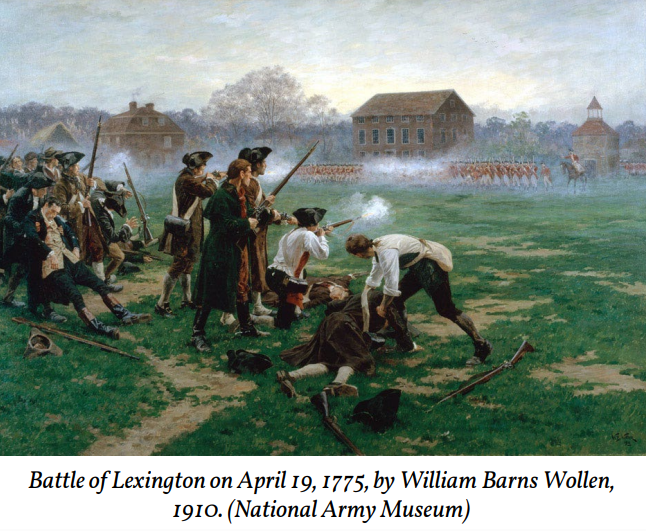
There is one more remembrance of Revolutionary War veterans at Arlington National Cemetery.
In 1775, when the British marched to Lexington, Massachusetts, they were met by local militiamen who had pledged to be “ready in a minute” to resist. They came to be known as the “Minute Men”. A shot was fired, no one even knows by which side, and that began the first battle of the American Revolution.
A reenactment organization, called The Lexington Minute Men, donated a memorial plaque and a tree to be placed at Arlington to honor the 8 American Minutemen who lost their lives in a turning point that changed history.
Honoring Our Own Fathers
The American Founding Fathers passed down more than their names and their ideas. They passed down stories, strength, and a sense of identity. Many of us reach a point in our lives where we wish we had learned more about the men who came before our own fathers. Thankfully, those stories still exist in cemeteries across the country and around the world.
BillionGraves helps you find them. You can locate the exact resting places of your ancestors, see who rests near them, and begin putting the pieces of your family’s past together in one place. We are making it easier than ever for new subscribers to start.
For a limited time, first-time subscribers can begin researching and preserving their family’s story for just $2.50 a month. This is the lowest price BillionGraves has ever offered, thanks to our America 250th Anniversary Celebrations. Click HERE to claim the offer.
Learn More
Check out these related blog posts:
Gravestone Symbols of the American Revolution
20 Gravestone Angels from Colonial America
Military Flag Holders at the Cemetery
Finding the Family of America’s Founding Fathers
Happy Cemetery Hopping! Happy Birthday, America!
Cathy Wallace