

Gravestone symbols of the American Revolution are especially meaningful in 2026 as the United States celebrates its 250th anniversary of independence. From winged skulls to willow trees, the symbols tell the story of veterans and their family members being honored for their sacrifice and service.
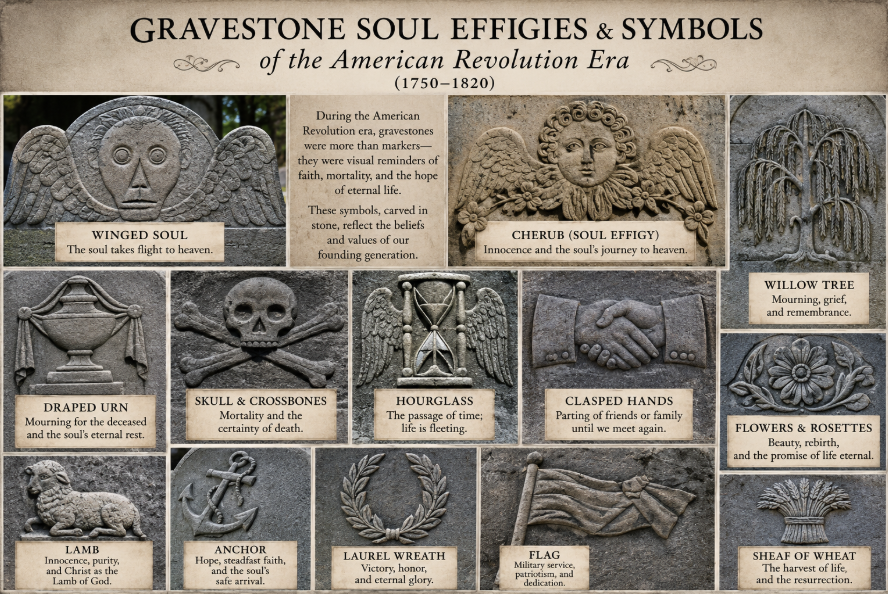
If you’ve spent much time poking around old cemeteries in New England, you know that some of the most common gravestone symbols from the American Revolutionary era are the winged skull and the cherub or soul effigy. Other gravestone symbols from this time period include the urn and willow, the hourglass, and anchors. Let’s explore these symbols and more.
Winged Skull
During the American Revolution, about 25,000 colonists died, out of a total population of 2.5 million. This represented about 1% of the total population, which is proportionally one of the highest mortality rates of any war fought by Americans.
Approximately 7,000 were killed in battle. Those who fought died at a rate of 10 to 12%. That’s one out of ten soldiers dying on the battlefield! Even more Revolutionary veterans died from disease, with smallpox and dysentery being the most common. It is estimated that 17,000 to 18,000 died from illness. No wonder symbols of death, such as skulls, found their way onto tombstones!
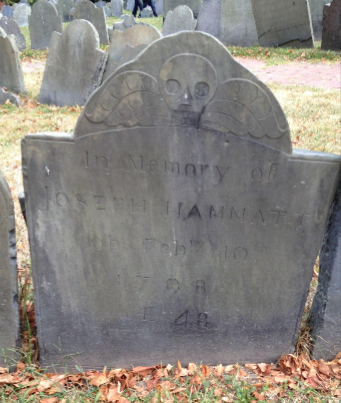
Revolutionary War soldier Joseph Hammatt (1750 – 1798) is buried at Copp’s Hill Burial Ground in Boston’s North End, Massachusetts, with a winged skull on his gravestone.
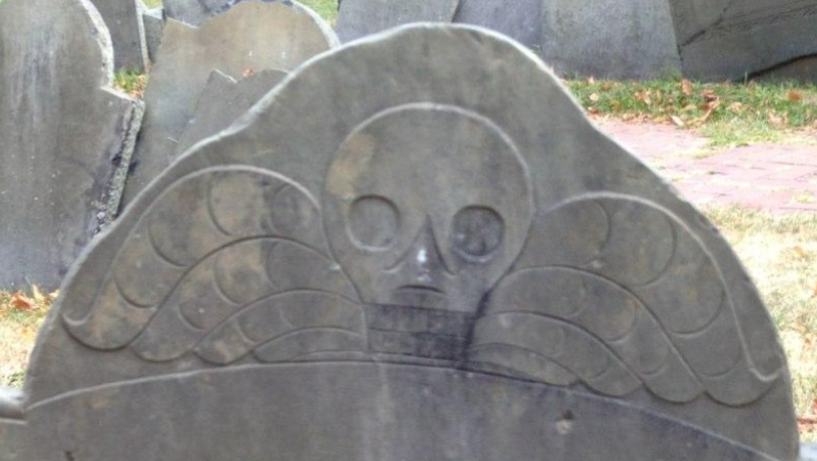
Winged skull gravestone symbols may seem strange to us today, but they held significant meaning for our ancestors.
What do winged skull gravestone symbols mean? The skull represents death. The wings represent a flight into heaven. Together, they are a straightforward reminder that life is short. You are going to die, so be prepared. You are going to be resurrected. Be righteous. Get ready for judgment day.
Urn and Willow
From the 1770s to the 1820s, urns and willow branches were popular on New England gravestones.
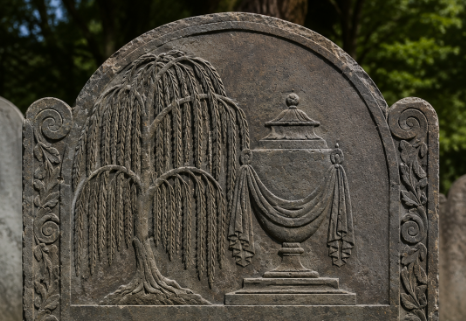
Since ancient Greece, urns have been used as repositories for cremated ashes. They symbolize both the physical remains and the soul’s journey into the afterlife.
The drooping weeping willow branches symbolize grief, mourning, and remembrance. But there’s more to it. Willows are also incredibly resilient trees. They bend without breaking in a storm. They have deep roots that enable the tree to continue to grow in challenging conditions. A fallen branch from a willow tree will often sprout roots of its own and start a new life. So, willow tree branches are also a symbol of resurrection. This symbol isn’t just about sorrow; it’s about love and life that endures even after loss.
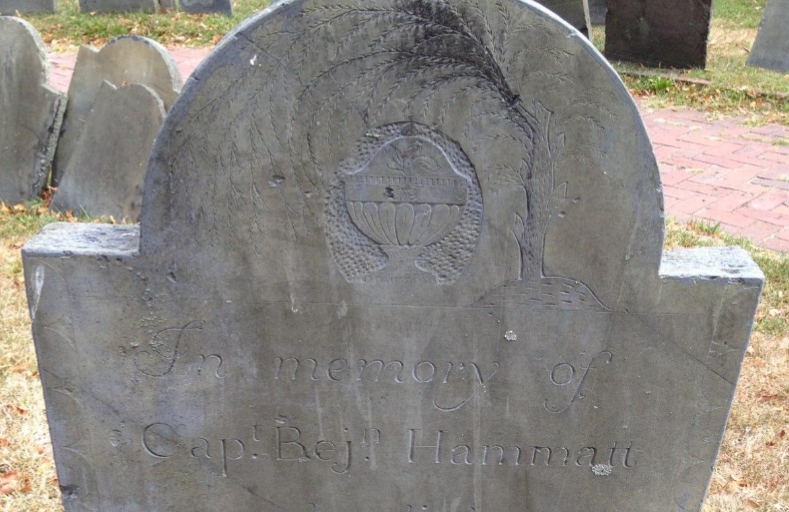
One of the winged skull gravestones mentioned above is for Revolutionary War soldier Joseph Hammat. This is the gravestone of Joseph Hammatt’s father, Captain Benjamin Hammatt (1712-1805). His gravemarker features an urn with willow branches hanging over it.
(By the way, I found Benjamin’s gravestone on the BillionGraves website by using Cemetery Intelligence. Did you know that you can find your ancestors the same way? Even if all of your ancestors aren’t buried together in the same family plot? I’ll explain how at the end of this article.)
Cherub or Soul Effigy
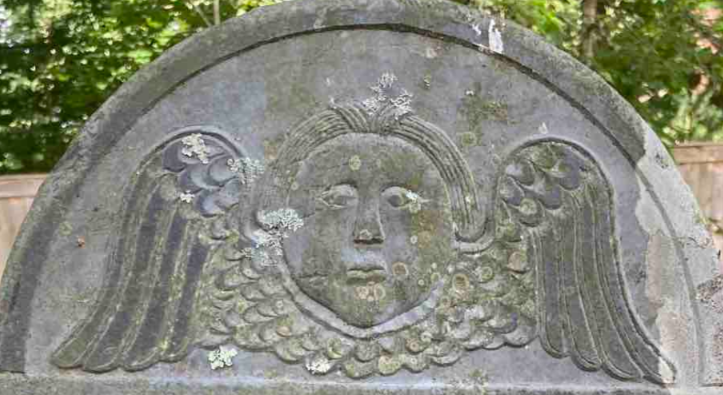
Toward the end of the Revolutionary War period, the skulls were fleshed out into faces.
Lieutenant James Breakenridge
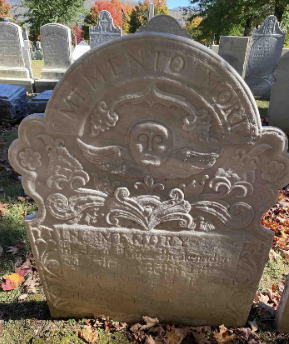
Here’s an example of a cherub or soul effigy gravestone symbol. This gravestone angel marks the grave of Lieutenant James Breakenridge. He was born in 1721 in Ireland and came to America with his father at the age of 6. They settled in Ware, Massachusetts.
Later, Breakenridge became a lieutenant in the French War and led the first military company in Vermont during the Revolutionary War. He married Mary Moore, and the couple had 13 children.
He died in 1783 and was buried in Bennington Center Old First Church Cemetery in Old Bennington, Vermont. The cherub on his gravestone is surrounded by scrolls and flowers, filling every open space, a common style for gravestones in Colonial America.
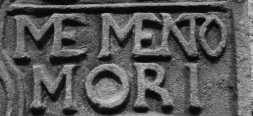
At the top of his gravestone, like many in the American Revolutionary era, is the inscription, Memento Mori.
Memento Mori is a Latin phrase that translates to “remember you must die”.It’s a reminder that death is inevitable and life is short, urging us to prioritize what truly matters and avoid wasting time on trivial pursuits.
Today, we would say that “Memento Mori” is a reminder to live with intention and make the most of each day.
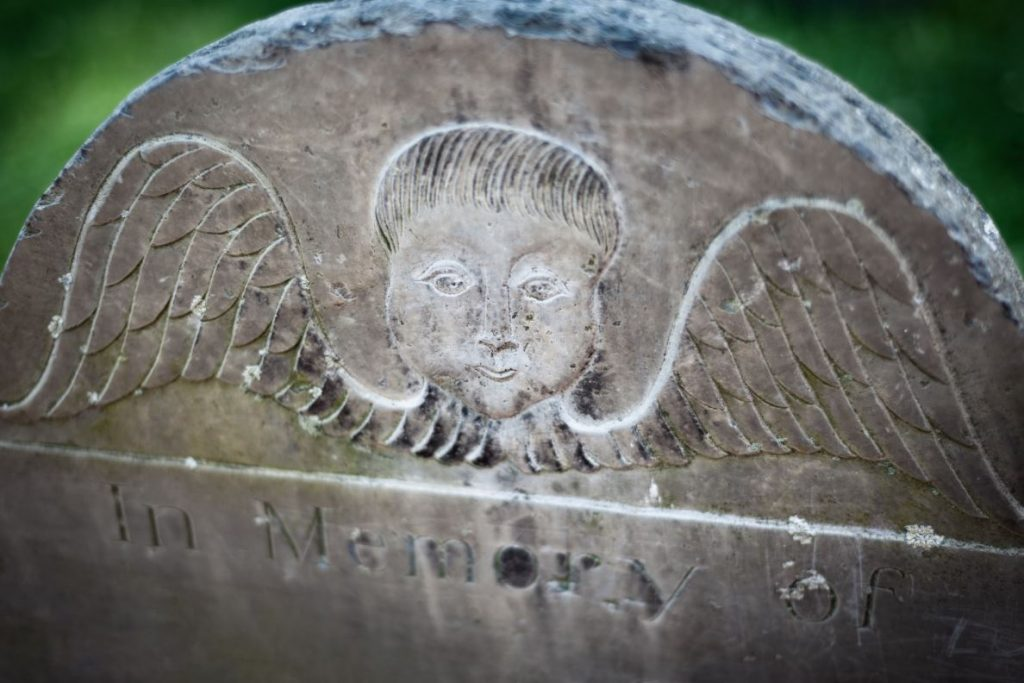
By the end of the 18th century, the winged skull gravestone symbols had evolved to look like little angels.
Hourglass
Another symbol from the American Revolutionary War era is the hourglass. It is symbolic of the passage of time.
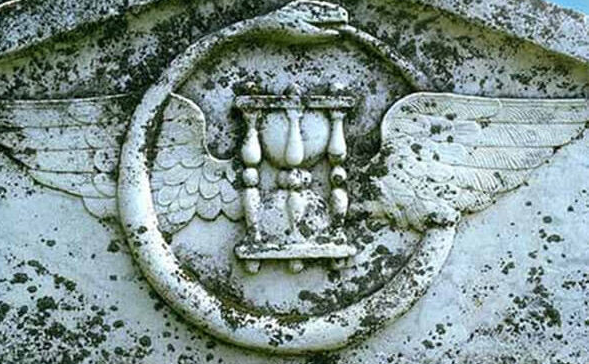
Just as sand passes through the hourglass, people pass quickly through mortality. The wings on this hourglass represent the deceased’s flight into heaven. Together, the hourglass and the wings quite literally mean “Time flies!”
Anchor
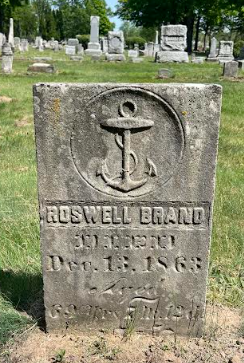
Anchors were another popular symbol during the American Revolutionary era. Sometimes an anchor was placed on the gravestones of seamen since it was their last resort in a storm. American Revolutionary era seamen included Continental Navy sailors, New England fishermen, and licensed privateers. Famous Patriots like John Paul Jones and John Barry led these mariners against the British Royal Navy.
But more often, the anchor on a gravestone was a symbol of hope. The Bible refers to anchors in connection with hope. Hebrews 6: 18-19 says, “… lay hold upon the hope set before us: which hope we have as an anchor of the soul, both sure and steadfast . . .”
Those without hope may be like a ship tossed on the sea, their emotions being carried in every direction. The anchor reminds family members who visit the grave to hold on to the hope of seeing their loved one again.
Laurel Wreath
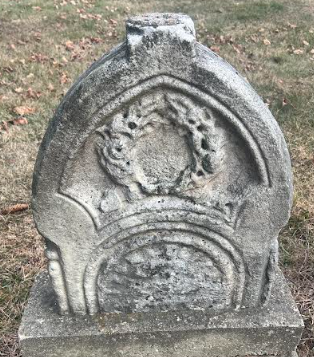
In ancient Greece, the winners of athletic competitions had laurel wreaths placed on their heads. During the American Revolutionary era, laurel wreaths on gravestones symbolized victory over death.
Lamb
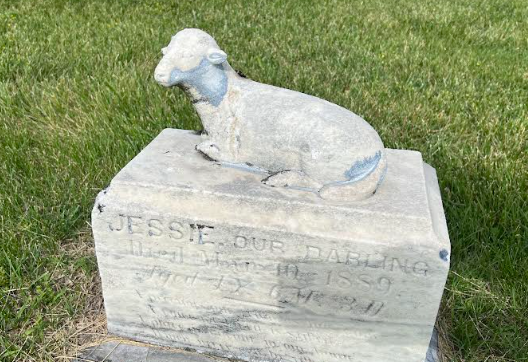
Lambs are a common symbol for infants’ gravestones during the American Revolutionary era. They are usually lying down and are often asleep.
Sheep are instinctive followers. When one sheep decides to go someplace, the rest of the flock usually tags along behind them. Likewise, small children are naturally submissive and loyal to those who lead them.
Rose
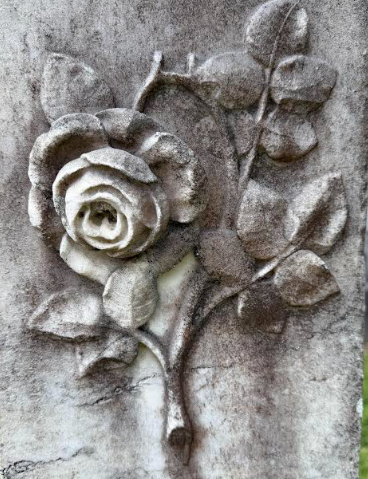
Just as a rose given on Valentine’s Day symbolizes love, a rose on a gravestone symbolizes eternal love.
A rosebud is a symbol of a life not yet in full bloom and is usually seen on the gravestone of a young child, youth, or young adult. A broken rosebud is a symbol of a life cut short.
Wheat
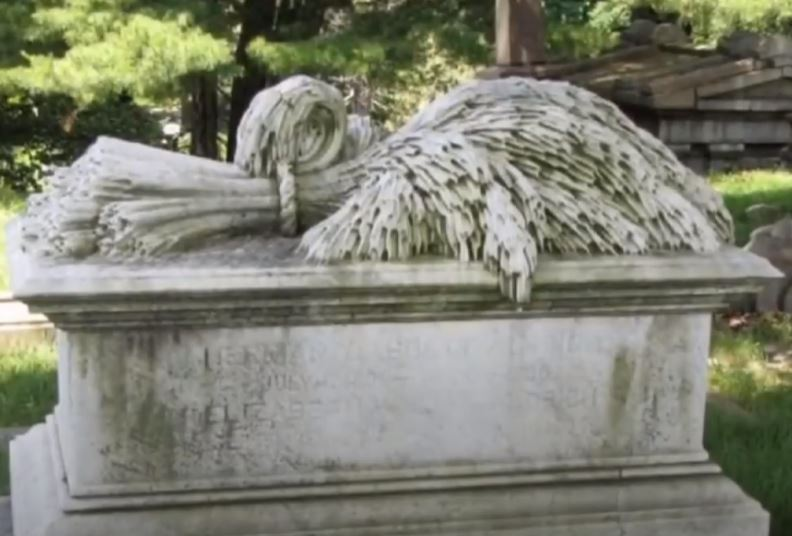
Of course, not everyone who died during the American Revolutionary War was killed in their youth during battle. Some veterans and civilians lived for many years after the war and died when they were older.
Wheat on a gravestone symbolizes a long life for one that was “harvested” by the reaper when the time was right.
Clasped Hands
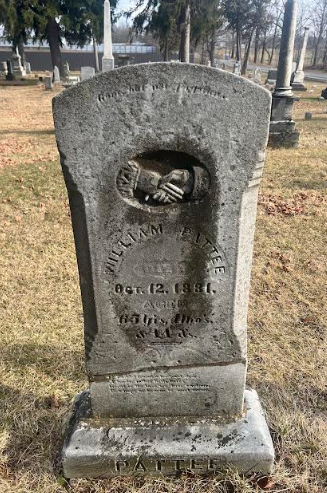
A handshake or clasped hands carved on a gravestone symbolizes a final farewell, a marriage bond, or a promise to reunite in heaven.
During the American Revolution, young men often said goodbye to family and friends with a handshake as they went off to war. If they died in battle, that last handshake became sacred to their loved ones.
Learn more about gravestone hand symbols HERE.
Find Your Revolutionary War Family Members
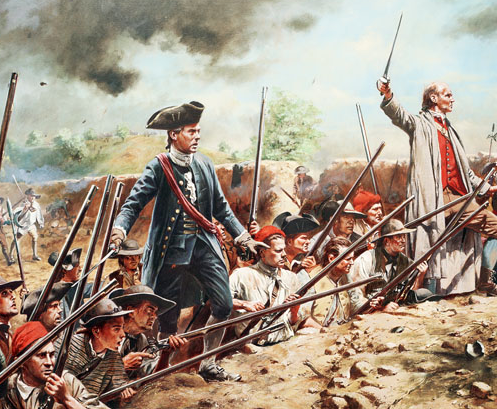
BillionGraves’ awesome new tool, Cemetery Intelligence™, can help you find your Revolutionary War ancestors and their family members. Let’s use Joseph Hammatt‘s family as an example.
Begin by opening Joseph Hammatt’s record page HERE. Then go to the Cemetery Intelligence™ sidebar and select the button labeled “Analyze Headstone”. At the click of a button, Joseph’s family connections appear:
Parents: Benjamin Hammatt of Cornwall, England, and Mary Pierce of Massachusetts Bay Colony
Wife: Abigail (Jackson) Hammatt (died August 1793).
Children:
- Mary Hammatt (b. ~1771; married a Rand)
- Joseph Hammatt (son)
- William Jackson Hammatt
- Nathaniel Hammatt (b. 1793)
- Henry Hammatt (b. July 29, 1781, Boston; d. 1809)
The names have links attached for the sources of information, so you can verify and expand your search.
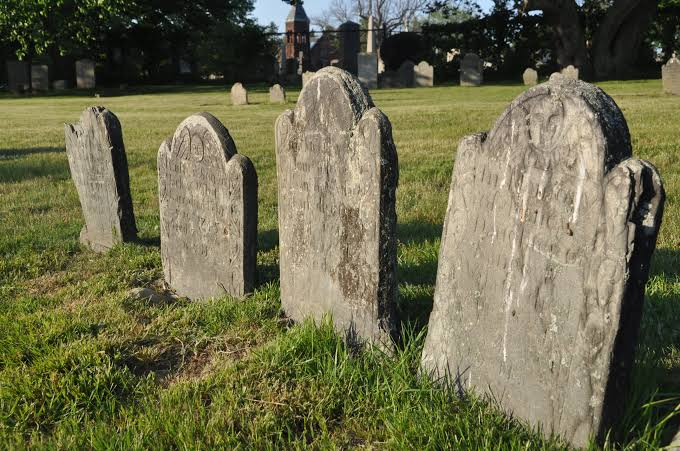
Find Nearby Graves with Cemetery Intelligence™
When you find gravestones for your own ancestors on BillionGraves, always be sure to use the Cemetery Intelligence™ feature to check for additional family members buried nearby. It’s an awesome way to grow your family tree!
Here is an example of how you can do that. The gravestone mentioned above with the winged skull on it was for Joseph Hammatt. Cemetery Intelligence™ was used to find the gravestone of his father, Benjamin Hammatt (with the urn and willow branch symbol on it).
Click HERE to see Joseph Hammatt’s record page. You can see that his gravestone is marked with an orange dot. Now, navigate to the Cemetery Intelligence™ sidebar and select the button labeled “Find Nearby Family”. This shows that another Revolutionary War veteran is buried in the same family plot: Captain Benjamin Hammatt.
Scroll further down the page to the map and select the button labeled “See High Precision GPS”.
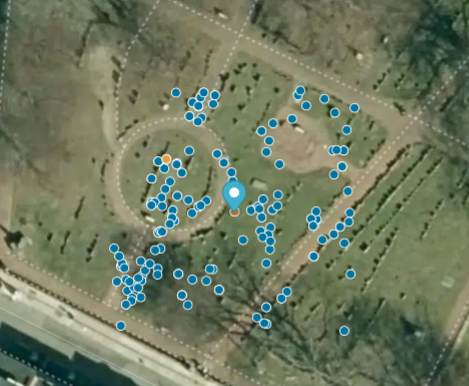
This will open a map with other gravestones that are marked with orange dots. Click on them to see more gravestones with the surname of Hammatt on them.
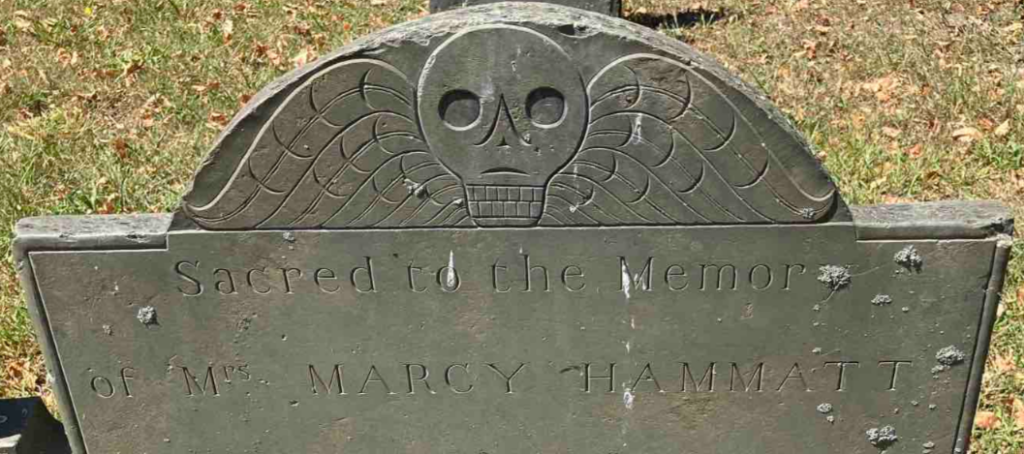
This brings up the gravestone of Mrs. Marcy Hammatt. Her gravestone also has a winged skull symbol.
Next, click on the Cemetery Intelligence™ button labeled “Get Life Story” to learn more. From there, we learn that Marcy is the wife of Benjamin Hammatt and the mother of Joseph Hammatt. We also learn that she was a mother who often ran their household on her own as her husband was a sea captain, whose ship set sail from the port of Boston. See how easy it is to research with Cemetery Intelligence™?!
Ready to give it a try? Go to https://billiongraves.com/ to find your own ancestors.
A Special Offer for New Subscribers
You can locate the exact resting places of your ancestors, see who rests near them, and begin putting the pieces of your family’s past together in one place. We are making it easier than ever for new subscribers to start.
For a limited time, first-time subscribers can begin researching and preserving their family’s story for just $2.50 a month. This is the lowest price BillionGraves has ever offered, thanks to our America 250th Anniversary Celebrations. Click HERE to claim the offer.
Learn More
Check out these related blog posts:
Gravestone Symbols of the American Revolution
20 Gravestone Angels from Colonial America
Military Flag Holders at the Cemetery
Finding the Family of America’s Founding Fathers
Happy Cemetery Hopping! Happy Birthday, America!
Cathy Wallace
Gravestone Symbols of the American Revolution