

Hero is a very strong word. A hero is someone who puts others before themselves. A hero sacrifices to make things better not only for themselves but for all people. In this blog post, we’ll explore 3 amazing American Revolutionary War heroes who shaped the early republic that became the United States.
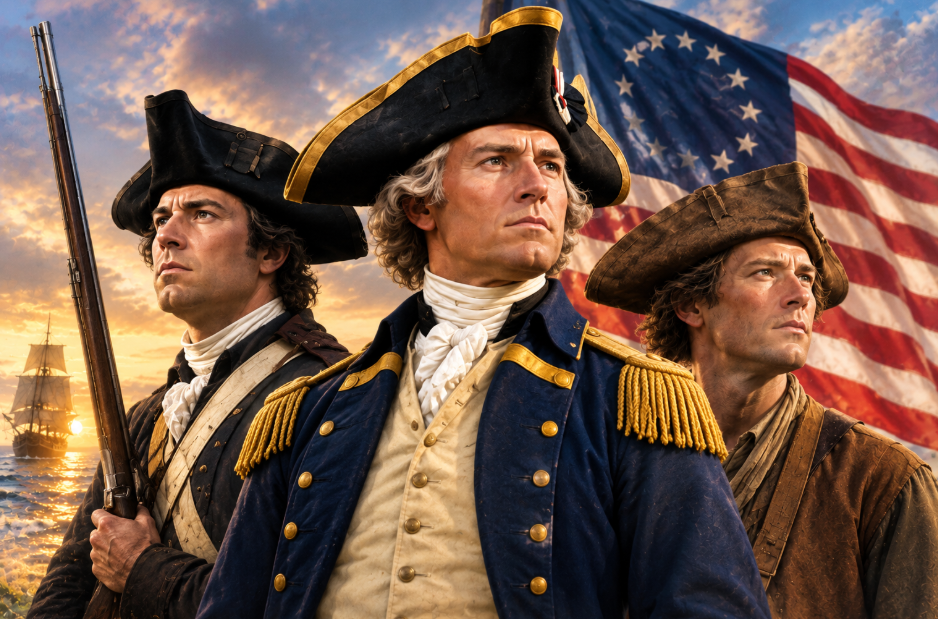
American Revolutionary War soldiers cherished memories of serving alongside Francis Marion, also known as South Carolina’s “Swamp Fox”. Sailors revered John Barry, the “Father of the US Navy”. Ordinary citizens looked up to men like Andrew Whittier, who lived a long life full of sacrifices for American liberty.
The Swamp Fox: Brigadier General Francis Marion
Brigadier General Francis Marion was born in South Carolina about 1732. He had military experience in the Cherokee War before the American Revolution even began.
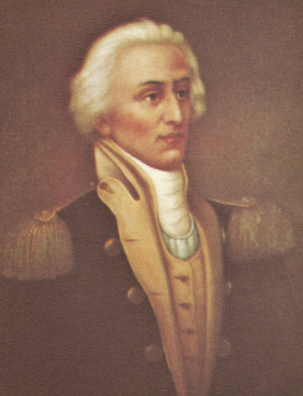
In 1775, Marion was made captain of the 2nd South Carolina Regiment. By 1776, they successfully defended a port city near Charleston from the British. Marion was then promoted to lieutenant colonel in the Continental Army.
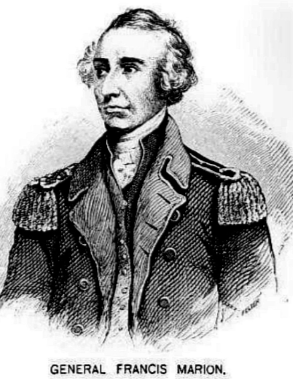
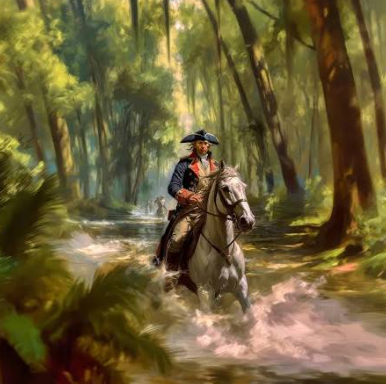
Eventually, the British captured Charleston in May 1780, but Marion escaped even though he had an injured ankle. He soon gathered a small group of volunteers for the South Carolina militia. Marion trained the men to operate in the swamps and forests, relying on surprise attacks and an intimate knowledge of the terrain.
Over and over, Marion’s troops struck British and Loyalist forces, disrupting communication and supply lines. Then they disappeared into the countryside before the larger British regiments could retaliate.
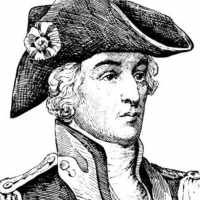
Marion’s success made him particularly annoying to the British. They chased his men through the soggy South Carolina terrain but could not capture them. It was this unconventional fighting style that led a British commander to give Marion his nickname of the “Swamp Fox.”
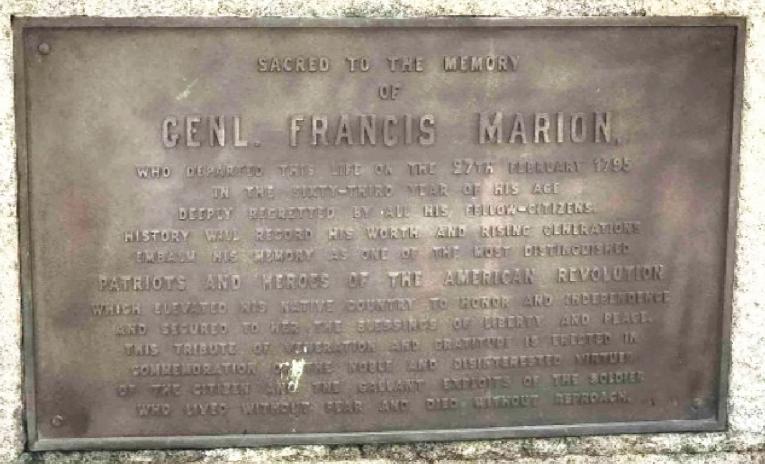
After the Revolution, Marion returned to his plantation in South Carolina and became a politician. He died on February 27, 1795, and was buried at Belle Isle Plantation Cemetery in South Carolina.
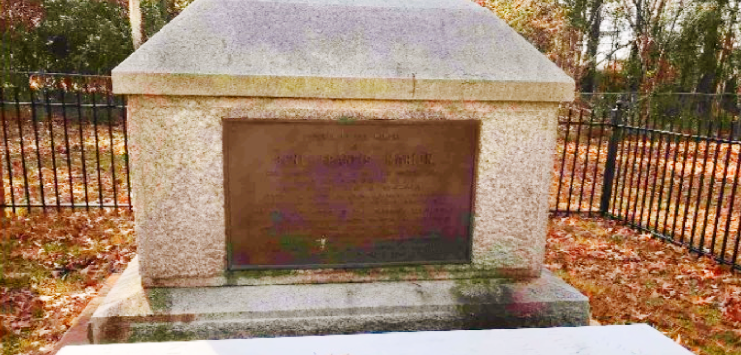
His legacy lives on as visitors come to visit the grave of the “Swamp Fox”. Click HERE to learn more on BillionGraves website.
Research Tip: “Analyze Headstone”

As a BillionGraves subscriber, you can click on “Analyze Headstone” in the Cemetery Intelligence sidebar to learn more about your ancestors.
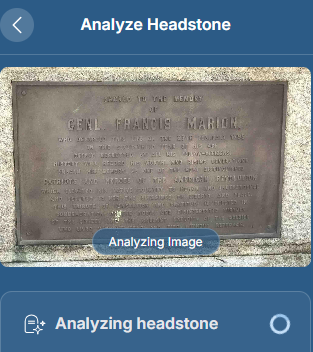
Cemetery Intelligence transcribed the epitaph for Francis Marion as, “Sacred to the memory of General Francis Marion who departed from this life on the 27th February 1795 in the 63rd year of his age. Deeply regretted by all his fellow-citizens, history will record his worth, and rising generations embalm his memory as one of the most distinguished PATRIOTS AND HEROES OF THE AMERICAN REVOLUTION… a citizen and soldier who lived without fear and died without reproach.”
Cemetery Intelligence also displayed all these additional interesting facts about Francis Marion:
- Marion’s family descended from French Huguenots who fled religious persecution.
- His parents were Gabriel and Esther (Cordes) Marion, who emigrated from France.
- At about age 15, Marion survived a shipwreck on a voyage to the West Indies and then returned home to manage the family plantation.
- After the war, Marion served multiple terms in the South Carolina Senate and helped draft the 1790 state constitution.
Commodore John Barry: Father of the American Navy
John Barry was born in 1745 in County Wexford, Ireland. He went to sea as a young man and eventually emigrated to America, where he settled in Philadelphia and became a successful merchant captain.
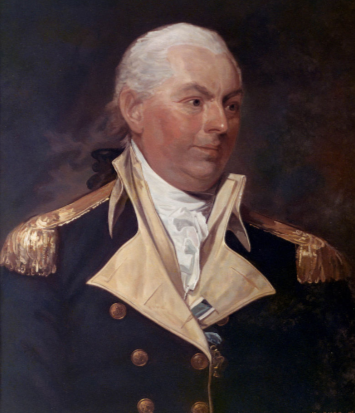
When the American Revolution began, Barry volunteered his services to the Continental Congress. With his experience at sea, Barry became one of the most important naval officers of the American Revolution.
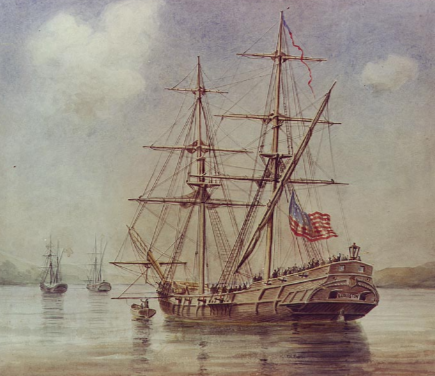
Throughout the war, Barry’s crews captured British vessels and supplies, as he commanded the ships Lexington, Raleigh, and Alliance. In 1781, while commanding the Alliance, he was seriously wounded during a battle but continued to lead his crew. His final naval engagement of the Revolution occurred in 1783, just a few weeks before the war officially ended.
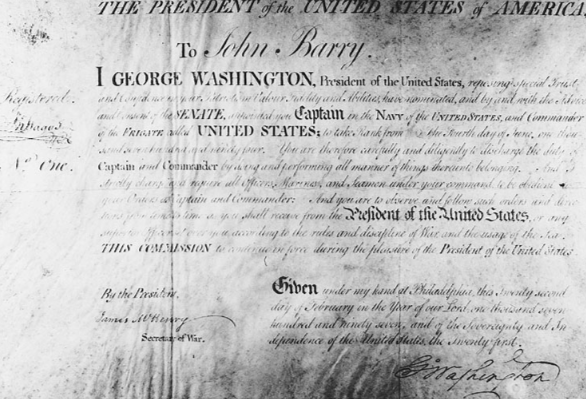
After the war, Barry returned to the merchant service. But in 1794, Barry returned to public service when the United States established a permanent navy and President George Washington appointed him to be its senior captain.
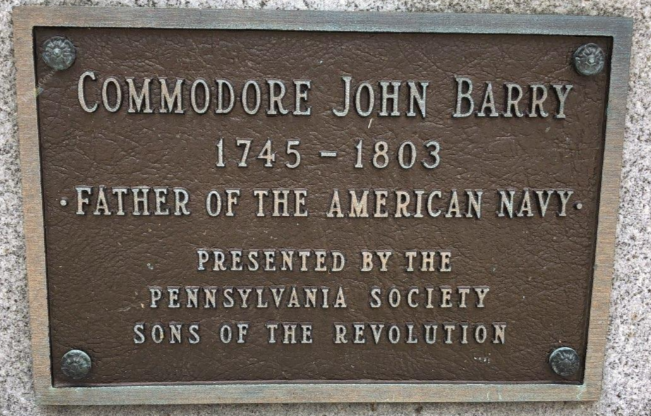
Thanks to his role in building the American Navy, Barry is often called the “Father of the American Navy.”
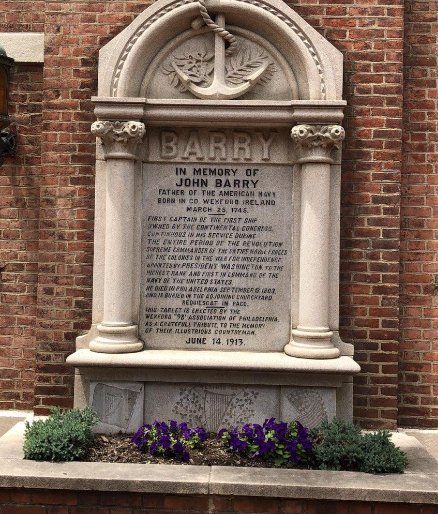
John Barry died in Philadelphia on September 13, 1803, and was buried in the churchyard of St. Mary’s Church. His grave is a reminder of an Irish immigrant who helped establish the American Navy during the nation’s earliest years.
His gravestone has an anchor engraved on it, a symbol of a seaman. Click HERE and HERE to learn more about anchors and other gravestone symbols.
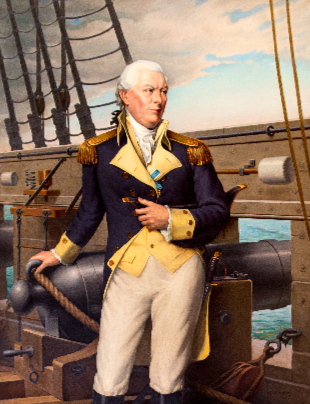
You can view John Barry’s gravestone and learn more about his life on the BillionGraves website HERE.
Research Tip: “Find Nearby Family”

One of the most amazing features of BillionGraves Plus Cemetery Intelligence is “Find Nearby Family.” With the click of a button, you can discover the relatives that are buried in the same cemetery as your ancestor. You can even find others with the same last name buried throughout the county and state.
Using the “Find Nearby Family” feature for John Barry led to the names of his two wives, who both died young.
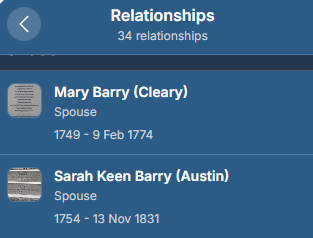
John Barry first married Mary Cleary and later married Sarah Austin Keen.
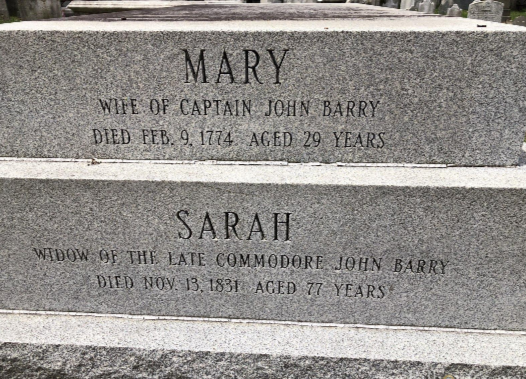
Mary died at age 29, and Sarah died at age 27.
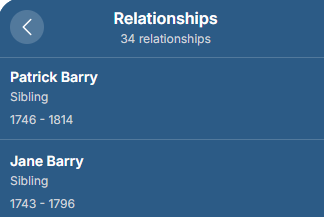
BillionGraves Plus Cemetery Intelligence also revealed John Barry’s siblings.
Click HERE to discover more about John Barry and explore how Cemetery Intelligence helped find more of his family members.
The Oldest American Revolutionary War Veteran: Andrew Whittier
Andrew Whittier is believed to have been the oldest veteran of the American Revolutionary War. According to his gravestone inscription, he died at the age of 124!

Whittier was born in 1716 in Germany and immigrated to America. There, he settled in Baltimore, Maryland, shortly before the American Revolution began. Baltimore is now a large city, but at that time, it had just a few log cabins.
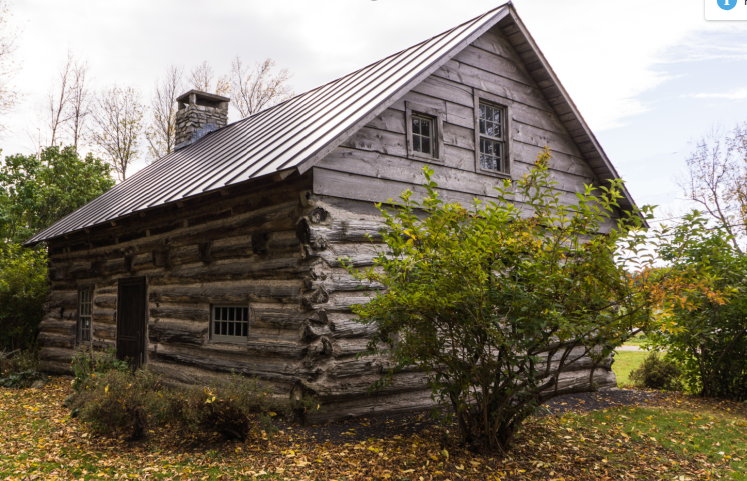
Whittier gradually moved westward, first to Virginia and then to Pennsylvania. At the age of 100, he married Mary Arnould Mackey. When she died in 1827, Whittier moved to Ohio to live with his stepdaughter’s family in the US Military District in Guernsey County, Ohio.
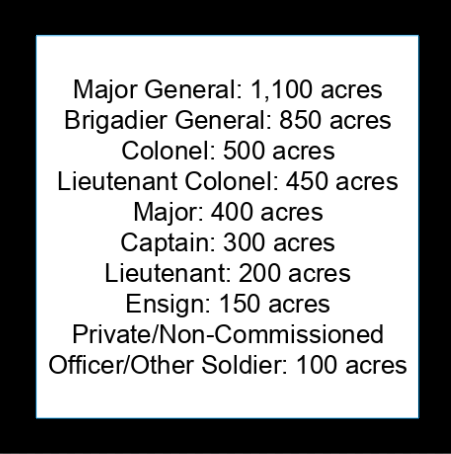
The US Military District was a 2.5-million-acre tract of federal land set aside to compensate American Revolutionary War veterans with land grants. It was established by Congress because the new nation lacked cash to pay soldiers. Veterans were offered land based on military rank, ranging from 100 to 1,100 acres.
Andrew Whittier died in 1840 and was first buried near Byesville, Ohio, in a small cemetery by a creek. In 1894, flooding caused some of the bodies buried there to come to the surface, so Whittier’s remains were moved to the Old Cambridge Baptist Church graveyard in Jackson Township, Ohio.
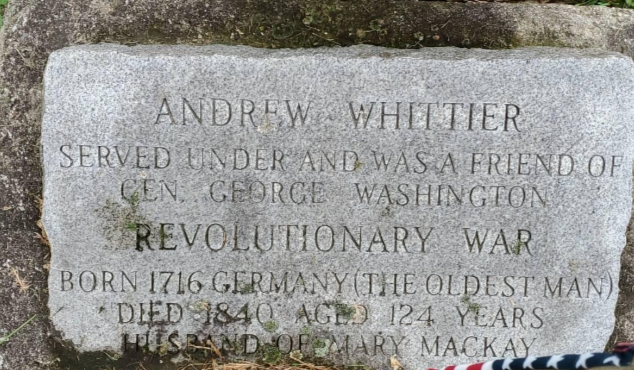
According to his gravestone, Whittier served under General George Washington during the American Revolutionary War and was even his personal friend.

According to The Official Roster of the Soldiers of the American Revolution Buried in the State of Ohio, the following story about Andrew Whittier has been handed down through residents in Jackson Township, Guernsey County, Ohio: “The year before his death, when 123 years old, during wheat harvest he cut with a sickle and put up unaided, twelve dozen sheaves of wheat, a feat rarely equaled by many men in the prime of life.”
Family records indicate that Andrew Whittier weighed less than 100 pounds at the end of his life, yet he remained active and helped cut wheat just days before his death.
Research Tip: “Find Other Sources of Information”

Use BillionGraves’ Cemetery Intelligence to find other sources of information about your own ancestors. It will help you find census records, military records, and historical documents.
Cemetery Intelligence will even provide the FamilySearch PID number for your ancestor.
On FamilySearch, PID stands for Person ID or Personal Identification number. It is a unique seven-character (such as G8GQ-QF8 for Andrew Whittier) assigned to every individual profile in the shared Family Tree. It is especially helpful for researchers trying to distinguish between individuals with similar names.
Explore more about Andrew Whittier on the BillionGraves website HERE.
Try BillionGraves Plus and Cemetery Intelligence
To learn more about your own ancestors, give BillionGraves Plus and/or Cemetery Intelligence a try. In honor of America’s 250th anniversary, new subscribers can upgrade for just $2.50 per month. It’s the best deal BillionGraves has ever offered. Check it out HERE.
Learn More
Discover more about cemeteries during the American Revolutionary era in these popular BillionGraves blog posts:
- American Revolution Gravestone Symbols
- 10 Fall Color Tours in American Revolutionary Cemeteries
- Finding the Family of America’s Founding Fathers
- Gravestone Symbols of the American Revolution
Happy Cemetery Hopping!
Cathy Wallace